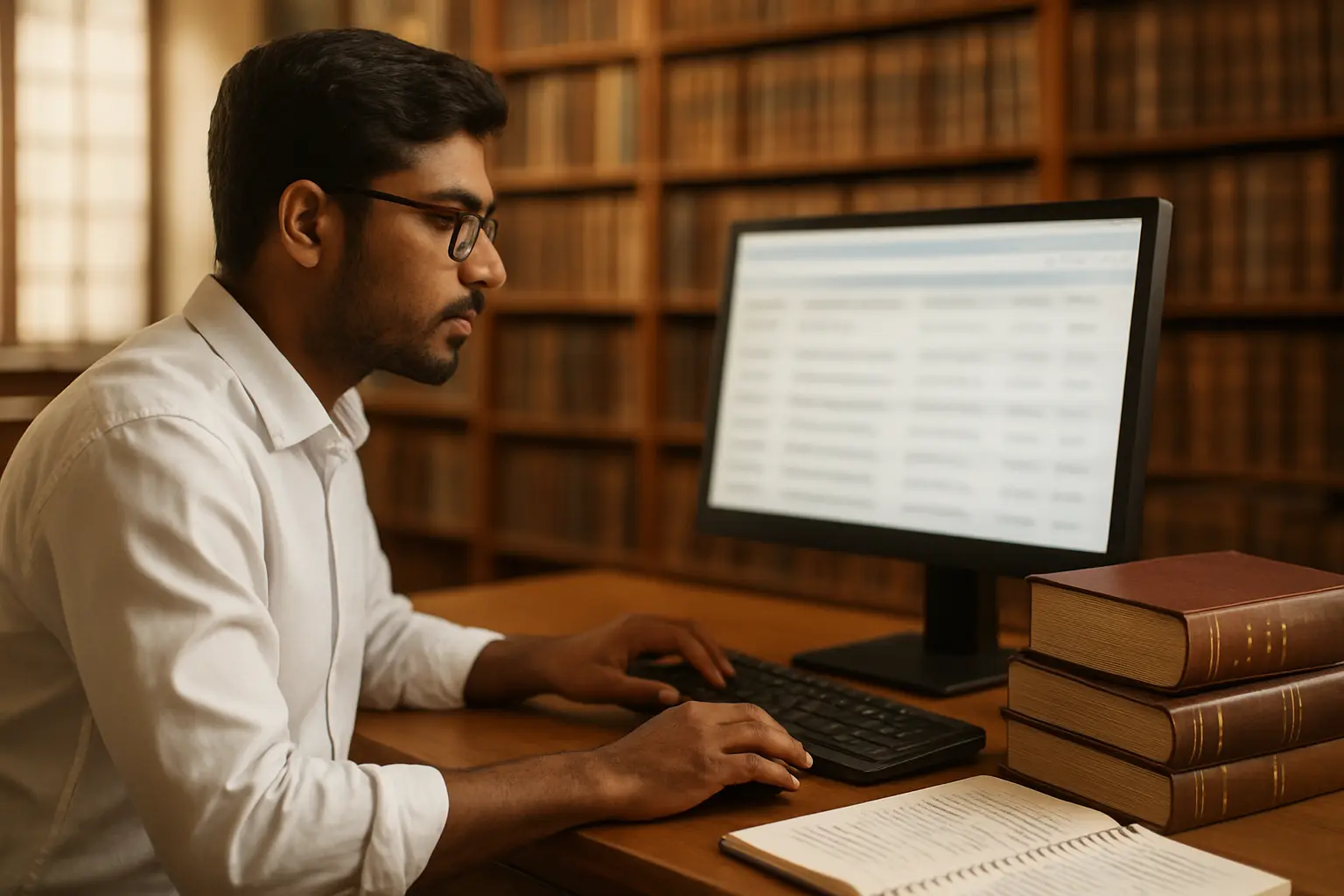
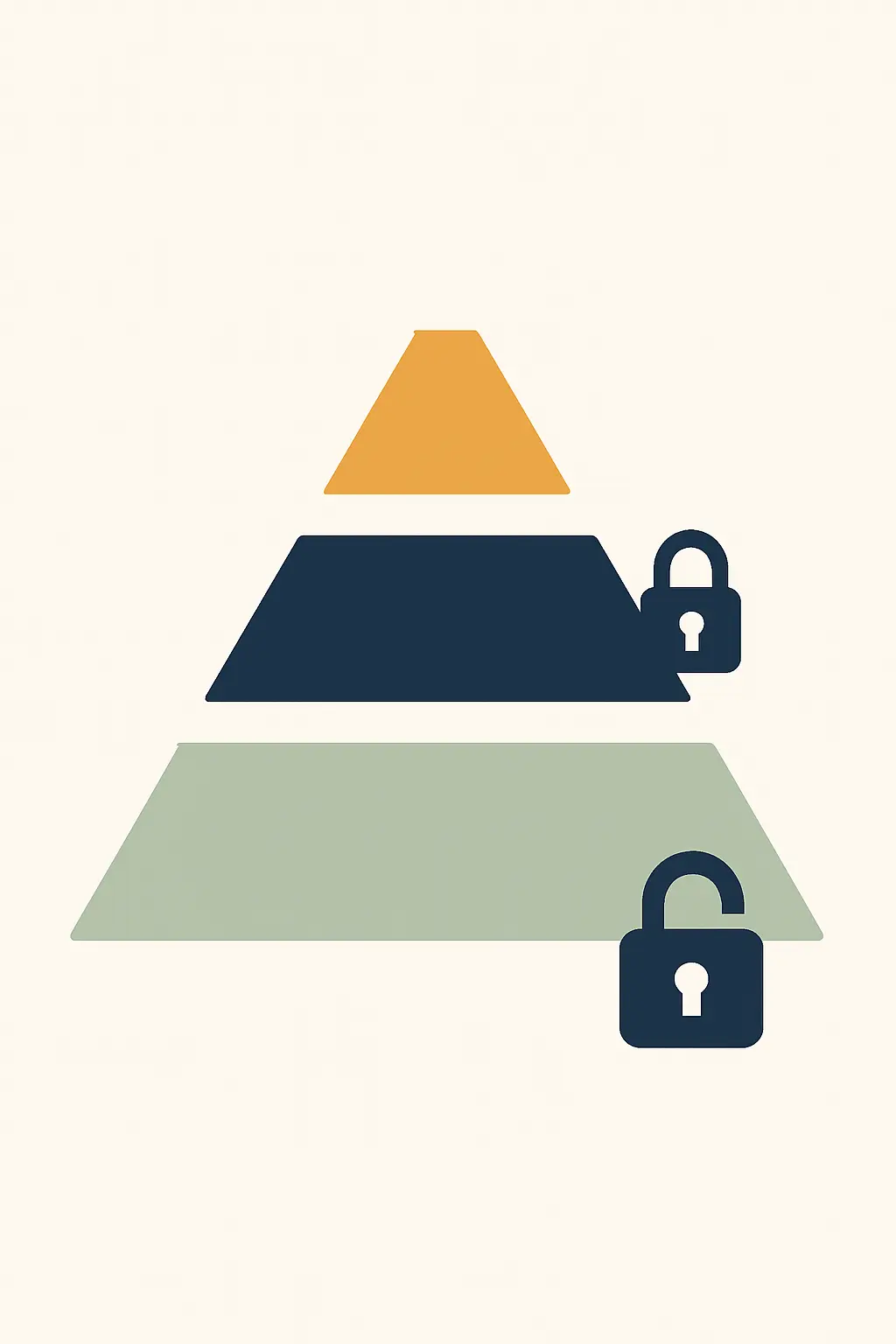
An LL.M. dissertation in India is built from three layers of sources, and the mistake most scholars make is paying for the middle one before exhausting the free one. The base layer is official and free: the Supreme Court’s Digital SCR and the Judgments and Orders portal for case law, India Code for statutes, the eGazette for notifications, the Law Commission for reports. The middle layer is the subscription databases, SCC Online and Manupatra, which add headnotes, editorial citations and case treatment, and which your university library very probably already licenses. The top layer is foreign and comparative material, HeinOnline and Westlaw Asia, reached through the library or not at all.
The table below compares nine sources on what they hold, what they cost a student and how you get in, checked at source in August 2026. Then a ranked shortlist, one recommendation for a one-year LL.M., and the questions supervisors get asked most. Where a vendor publishes its prices only inside its app, we say so rather than quote a figure we could not verify.
| Source | Holds | Cost to a student | How you get in | Best for |
|---|---|---|---|---|
| Digital SCR (scr.sci.gov.in) | Supreme Court Reports, the official reporter, searchable by SCR or neutral citation | Free | Open, with a captcha | The authoritative text of any Supreme Court judgment |
| Judgments and Orders portal (judgments.ecourts.gov.in) | Supreme Court and High Court judgments, keyword, phrase and proximity search, interface in 20-plus Indian languages | Free | Open, with a captcha | High Court case law without a subscription |
| India Code (indiacode.gov.in) | Central and state Acts with amendments, rules and regulations | Free | Open | The current text of any statute |
| eGazette (egazette.gov.in) | Gazette of India notifications, including commencement notifications and rules | Free | Open | Proving when a provision came into force |
| Law Commission of India and PRS Legislative Research | Law Commission reports; bill texts and summaries at PRS | Free | Open | Reform history and legislative intent |
| Indian Kanoon | Full-text judgments of the Supreme Court, High Courts and tribunals, plus statutes, with citation links between them | Free to search | Open in a browser; blocks automated access | Finding cases on a phrase across courts fast |
| SCC Online | Supreme Court Cases and the EBC report series, with headnotes, editorial citations and case treatment | Paid; institutional and individual plans, prices inside the app | Library IP or remote login; individual subscription | Citable headnotes and the SCC citation examiners expect |
| Manupatra | Indian case law, statutes and commentary since 2001; a free neutral-citation lookup; a Students Hub; AI research tools | Paid; institutional and individual plans, prices inside the app; neutral-citation search free | Library or individual login | Case treatment, secondary material and cross-publisher citation lookup |
| HeinOnline and Westlaw Asia | Foreign and international law journals, UK, Hong Kong, Singapore, Malaysia and Indian material; Westlaw Asia offers a free trial | Institutional only in practice | Library subscription | The comparative chapter |
The ranked shortlist
1. The official free layer: Digital SCR, the Judgments portal, India Code and the eGazette
Who it suits: every LL.M. scholar, for every citation of a statute or a Supreme Court judgment. The Supreme Court’s Digital SCR search takes an SCR citation or a neutral citation and returns the official report, and the Judgments and Orders portal extends the same free search to the High Courts with boolean and proximity operators. India Code carries the consolidated text of central and state Acts and has moved to indiacode.gov.in, so update any bookmark to the old nic.in address. The eGazette is where you prove that a section was actually brought into force, which is the question an external examiner asks when a dissertation cites one of the 2023 criminal codes.
Where it falls short: no headnotes, no editorial citation, no indicator that a judgment has been overruled, and search interfaces that ask for a captcha on every query. It tells you what the law says, not what has since been said about it.
2. Indian Kanoon
Who it suits: the scholar at the discovery stage who needs every judgment that uses a phrase, across the Supreme Court, the High Courts and tribunals, in one search. It is free to use in a browser, links each judgment to the statutes and cases it cites, and is faster than any official portal for a first sweep of the field. Where it falls short: the text is unofficial, so a judgment found here is cited from the Digital SCR or from SCC, never from Indian Kanoon itself; it does not tell you whether a case is still good law; and the site blocks automated tools, so nothing can be scripted against it.
3. SCC Online
Who it suits: the scholar writing the judicial-trends chapter, where every leading case needs its ratio stated and its citation in the form examiners recognise. SCC Online is the database of the Eastern Book Company, publisher of Supreme Court Cases, and it supplies the headnote, the editorial citation such as (1973) 4 SCC 225, and the treatment history showing where a case has been followed, distinguished or overruled. National law universities and most law faculties license it, usually with remote access through the library; check the library’s e-resources page before buying anything. Where it falls short: individual and student plans exist, but the site is a single-page application and publishes prices only after login, so budget for a paid tool and confirm the current figure on the site itself.
4. Manupatra
Who it suits: the scholar whose university licenses Manupatra rather than SCC Online, and anyone who needs to convert a citation from one publisher’s format to another. Manupatra has run an online legal research database since 2001, reports over 100,000 users in 15-plus countries, and now bundles AI drafting, summarising and translation tools with a Students Hub of notes and internships. Its neutral-citation platform is free and searchable with any publisher’s citation, which is exactly the tool you need when a judgment is cited three ways across your sources. Where it falls short: the full database is paid and, as with SCC Online, prices are published only inside the product; the site itself requires JavaScript and shows nothing to a text browser.
5. HeinOnline and Westlaw Asia
Who it suits: the comparative chapter, and only through the library. HeinOnline is the standard route to foreign and international law journals; Westlaw Asia, from Thomson Reuters, covers India alongside the United Kingdom, Hong Kong, Singapore and Malaysia and offers a free trial to institutions. Where it falls short: individual pricing is not aimed at students at all, so if the library does not subscribe, the comparative chapter is written from open-access journals and the foreign court’s own website.
What your library already pays for
The single biggest saving available to an LL.M. scholar is a visit to the library’s e-resources page. NALSAR’s library, to take one national law university, reports over 65,000 physical volumes, more than three lakh e-books and over a hundred newspapers, magazines and journals, with remote access through a discovery platform; a licensed legal database sits behind that page at every NLU and at most state law faculties. Ask two questions at the desk: which of SCC Online and Manupatra is licensed, and whether remote login works off campus.
Two national schemes matter here, one of them recently. N-LIST, the INFLIBNET college programme, states on its own site that it closed from 2025-26 and directs users to One Nation One Subscription. ONOS, the government scheme for centrally and state-funded institutions, reports 6,500-plus member institutions, 30-plus international publishers and 13,000-plus journal titles, with IP-based and off-campus access. It covers international journal publishers, not Indian case-law databases, so it helps the literature review and the comparative chapter and does nothing for the judicial-trends chapter. Whether a journal you plan to cite is indexed anywhere that counts is a separate check, set out in our guide to verifying a journal in India.
Our recommendation for a one-year LL.M.
Do the discovery on Indian Kanoon and the official portals, both free; cite every statute from India Code and every Supreme Court judgment from the Digital SCR or from SCC; and use whichever of SCC Online or Manupatra your library licenses for headnotes and treatment, buying an individual plan only if the library has neither. Spend nothing on HeinOnline or Westlaw Asia; if the library lacks them, scope the comparative chapter to open sources. Search Shodhganga before settling the topic, because a deposited LL.M. or Ph.D. thesis on the same question is the first thing your supervisor will look for; how that search fits into the review is in our guide to writing a literature review for a thesis in India.
Where the sources go once found, chapter by chapter, is set out in our guide to structuring an LL.M. dissertation in India; the broader map of Indian official data by discipline, useful for an empirical law dissertation, is in our guide to official data sources for an Indian thesis.
Neutral citations: the one format every source now understands
Since 2023 the Supreme Court has assigned every judgment a neutral citation in the form year, INSC, serial number, independent of any publisher, and the High Courts have followed with their own codes. The Digital SCR search accepts it directly, Manupatra’s free lookup converts it to and from SCC and other publishers’ citations, and the Judgments and Orders portal indexes by it. Record the neutral citation for every case you read alongside the report citation; it is the one identifier that will still resolve when a database subscription lapses after you graduate.
Four habits that keep the sources usable
- Record the citation at the moment of reading. Case name, report citation, neutral citation, paragraph number, date read. A reference manager that handles legal material is compared in our shortlist of reference management software for Indian researchers.
- Cite the official or editorial report, never the search engine. Indian Kanoon and the free portals are where you find a case; SCR and SCC are what you cite.
- Check treatment before the ratio goes into the dissertation. A leading case that has been overruled is the commonest viva ambush in law, and only the subscription databases flag it.
- Quote less than you found. Statutory text and long judicial extracts push a law dissertation’s similarity score up faster than any other discipline’s; quote the operative words, paraphrase the rest, and run your own check before the department does. The recovery plan when a report comes back high is in our guide to reducing a similarity report above the limit.
Check the quoted law before the department does
A law dissertation carries more verbatim text than any other kind, and a similarity report that counts every quoted section and headnote can cross the department’s threshold on quotation alone. The Tesify Plagiarism Checker shows you which passages are matching before submission, so you can decide what to quote and what to paraphrase while there is still time.
Tesify also drafts the judicial-trends and legislative-framework chapters around the cases and sections you have collected, keeping every citation in the form your faculty requires from the first draft to the bound copy. The analysis and the argument remain yours.
Start your LL.M. dissertation with Tesify — free to start
Frequently asked questions
Is SCC Online free for students?
No. SCC Online is a paid database with institutional and individual plans, and it publishes prices only inside its application. Most national law universities and law faculties license it, often with remote access, so check the library’s e-resources page before paying for an individual plan.
Is Manupatra free for students?
The full database is paid, with prices published inside the product. Manupatra’s neutral-citation lookup is free, its Students Hub of notes and internships is open, and many universities license the database; ask the library which of Manupatra and SCC Online it holds.
Can I cite Indian Kanoon in an LL.M. dissertation?
Use it to find the case, not to cite it. The text on Indian Kanoon is unofficial, so cite the Supreme Court Reports through the Digital SCR, the editorial report such as SCC, or the neutral citation, and give the paragraph number.
Where do I get Supreme Court judgments for free?
From the Supreme Court’s own Digital SCR search at scr.sci.gov.in, which takes an SCR or neutral citation, and from the Judgments and Orders portal at judgments.ecourts.gov.in, which also covers the High Courts and searches by keyword, phrase and proximity. Both are free and both use a captcha.
Where do I find the current text of an Act?
On India Code, which has moved from indiacode.nic.in to indiacode.gov.in and carries central and state Acts with their amendments. For the date a provision came into force, search the notification on the eGazette.
Does One Nation One Subscription cover legal databases?
No. ONOS provides access to international journal publishers, reporting 30-plus publishers and 13,000-plus titles for 6,500-plus government institutions. It does not include SCC Online, Manupatra or any Indian case-law database; those remain library subscriptions.
How do I check whether a case has been overruled?
Through the case-treatment feature of SCC Online or Manupatra, which lists the later decisions that followed, distinguished or overruled it. The free official portals and Indian Kanoon do not flag treatment, so a leading case found there must be checked in a subscription database before its ratio is relied on.
Which database do examiners expect me to cite?
Examiners expect the official or an editorial report citation with a paragraph number, in the footnoting style your faculty prescribes, usually the Indian Law Institute style. Which database you used to find the case does not appear in the footnote.