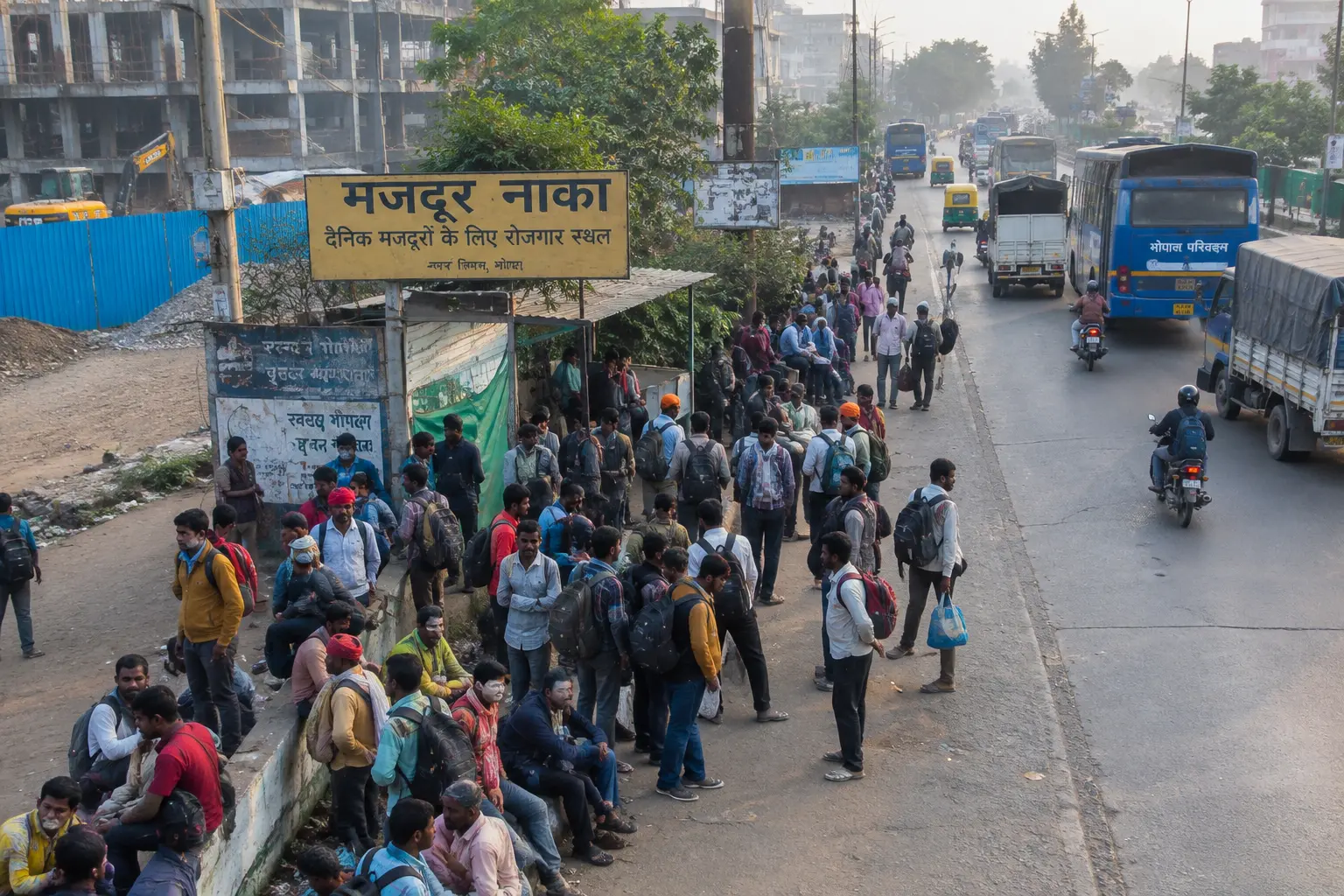
28.9% of India’s population were migrants according to the Periodic Labour Force Survey (PLFS) 2020-21 — the most recent large national survey to measure migration directly — making migrant workers one of the largest, most under-studied populations available to a Public Health dissertation, provided the study narrows to one migration stream, one health outcome, and a genuinely reachable sample. “Migrant health” alone is too broad for a dissertation; a defensible study picks a specific population (say, interstate construction-site workers, or seasonal agricultural migrants) and a specific, measurable health question.
What the National Data Actually Says About Migrants in India
| Source | Round / year | What it measured | Key figures |
|---|---|---|---|
| PLFS 2020-21 | July 2020 – June 2021 | Migration rate, reason, rural/urban, gender | Migration rate 28.9% overall (26.5% rural, 34.9% urban); 10.7% among males and 47.9% among females; marriage accounted for about 86.8% of female migrants, while “in search of employment or better employment” was the largest single reason among male migrants at 22.8% |
| NSS 64th Round | July 2007 – June 2008 | Employment-unemployment and migration particulars | The last NSS round with a dedicated migration module before migration questions moved into PLFS |
| Survey on Migration (NSO, MoSPI) | July 2026 – June 2027 | A dedicated survey on the extent and patterns of migration, including inter-state, seasonal and return migration and reasons for migrating | Fieldwork period runs to June 2027; no results are published yet — check its release status before citing any figure from it |
The gap between these sources matters for a dissertation: PLFS gives you the most current overall migration rate, but its sample was not purpose-built for migration research, so it is a weak instrument for short-term, circular and seasonal migrants — exactly the population most likely to have distinct occupational health exposures. The new Survey on Migration is designed to cover seasonal and return migration specifically; until it publishes, PLFS and the older NSS 64th round remain the national reference points, and neither substitutes for your own field survey of a specific migrant population.
Why Migrant Workers Are a Genuinely Under-Studied Public Health Population
Migrant workers sit at the intersection of several public-health blind spots that make them a strong dissertation population precisely because they are hard to study through the usual instruments: they are frequently missed by household-based facility-linked health records (NFHS-5 and HMIS both draw on residential/facility sampling frames that undercount a mobile population); occupational exposures specific to their work (construction dust, agricultural pesticides, factory-floor hazards) are rarely captured in general population-health surveys; and access barriers (no local ration card, no continuity of care across states, language differences at the destination) are themselves researchable public-health questions rather than incidental detail. This combination is exactly what makes the population valuable to a dissertation rather than merely difficult: a genuinely under-instrumented population means a well-scoped, well-conducted small study can say something the national datasets structurally cannot, which is a stronger positioning for a research-gap statement than re-analysing a population the national surveys already cover well.
What Researchable Questions Does This Population Support?
The bracketed terms below are fill-ins — replace each one with your own chosen migrant population, destination city or health outcome before using the question in a proposal; none of these is a real, submitted research question.
| Angle | Example (illustrative — fill in your own population/city/outcome) | Typical design |
|---|---|---|
| Access | What barriers do interstate migrant construction workers in [your city] report in accessing primary healthcare? | Cross-sectional survey, structured interview schedule |
| Occupational exposure | What is the prevalence of respiratory symptoms among migrant workers at [your industry] sites in [your city]? | Cross-sectional survey with a validated respiratory-symptom questionnaire |
| Maternal/child health | How does antenatal care utilisation differ between migrant and local women in [your district]? | Comparative cross-sectional study |
| Health-system response | How are Ayushman Bharat/PM-JAY entitlements actually being accessed by interstate migrants in [your state]? | Mixed methods: administrative-data review plus beneficiary interviews |
Access, Ethics and Sampling for a Migrant-Worker Population
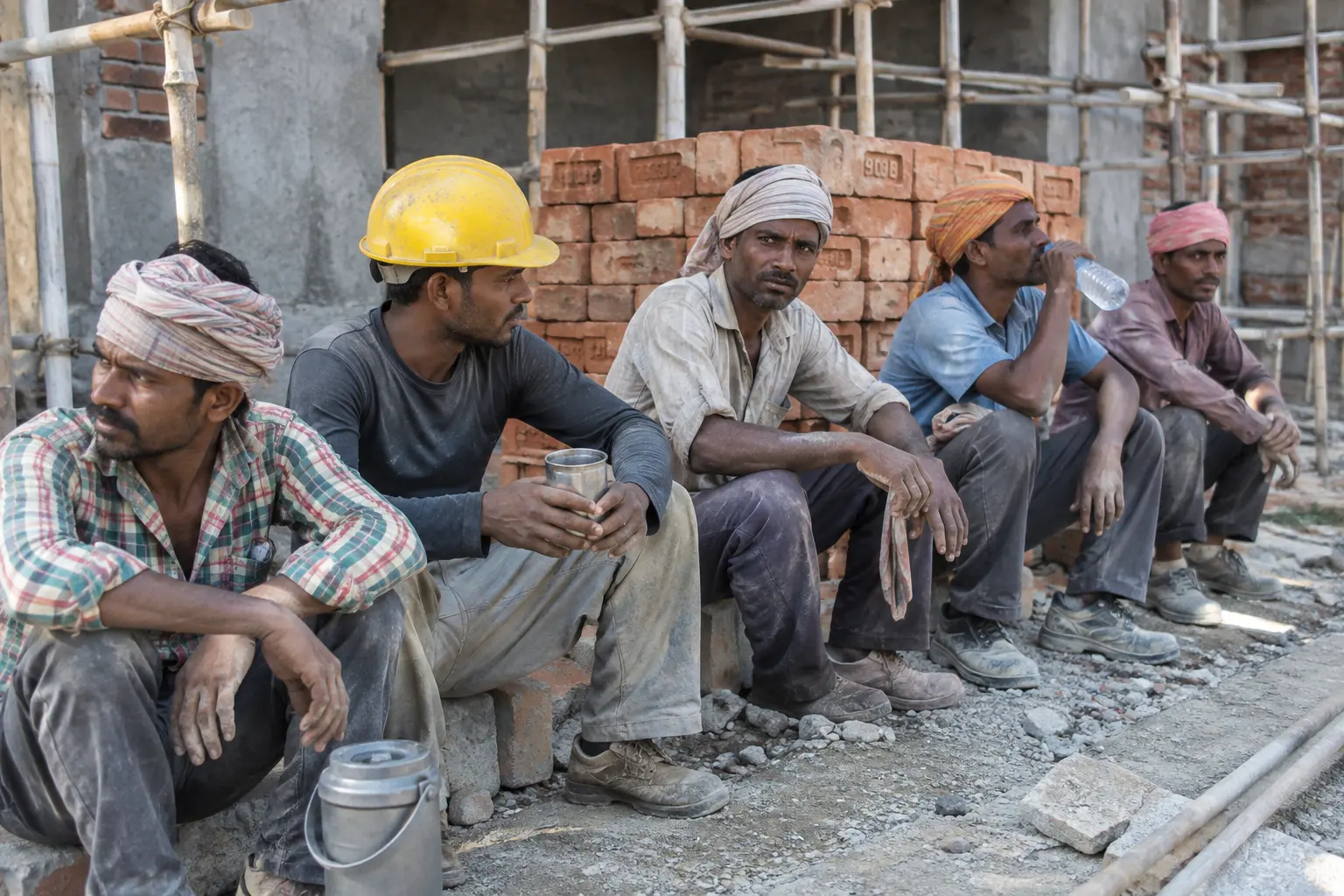
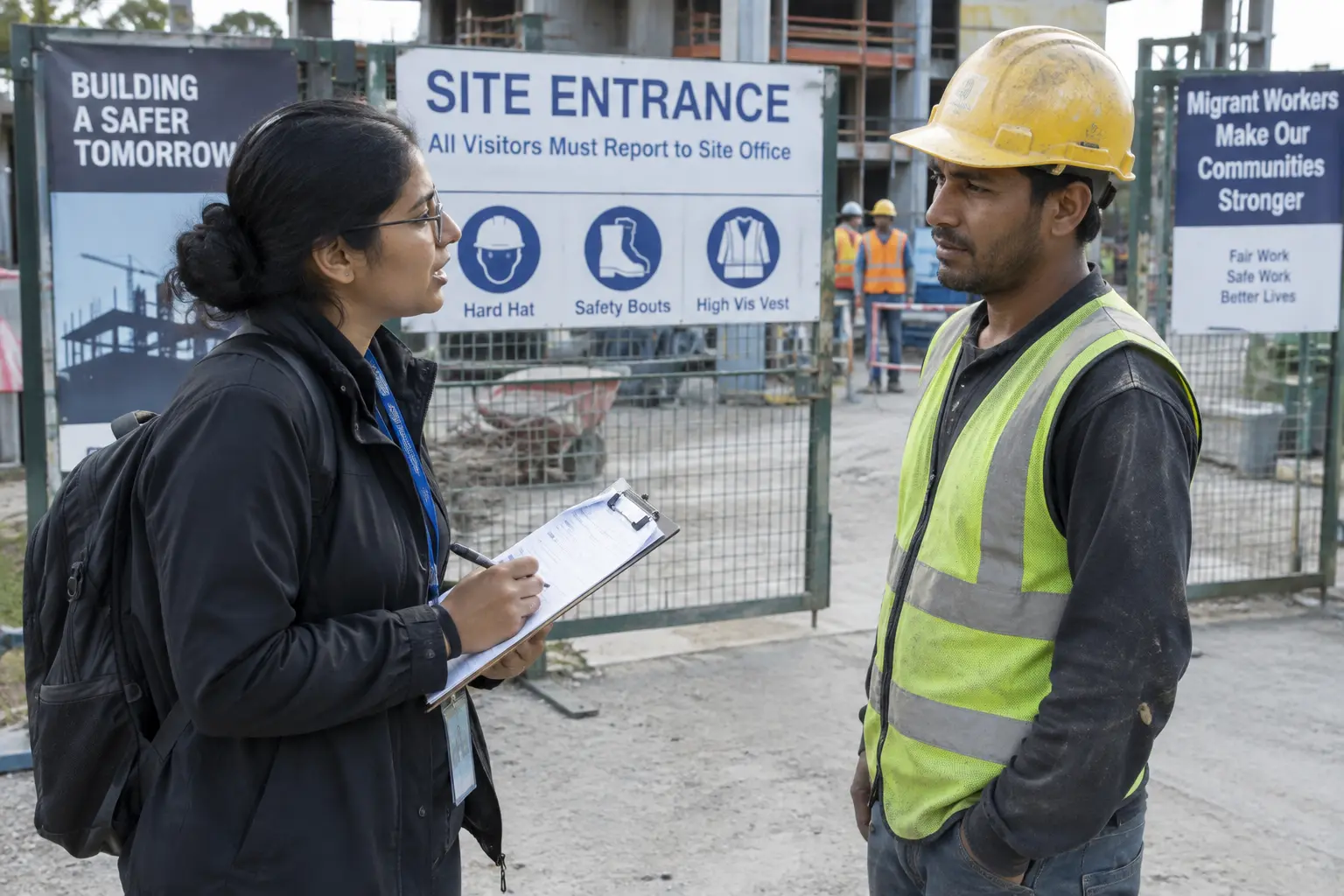
Migrant worker populations raise access questions a standard household-sample public health study does not: there is usually no single sampling frame (no local voter list or ration-card register captures interstate migrants comprehensively), so most Indian dissertations on this population use a combination of site-based sampling (construction sites, factory floors, labour chowks/naka points where daily-wage workers gather) and snowball or respondent-driven sampling through community contacts or NGOs working with migrant populations. Access typically requires permission from the site (contractor, factory management, or the NGO facilitating contact) in addition to your own institution’s ethics clearance, and — because migrant workers are often in a precarious employment relationship with whoever grants you site access — extra care in the consent process to make clear that participation or refusal has no bearing on their employment. State this access chain explicitly in your proposal; committees will ask how you propose to reach a population with no fixed address.
The e-Shram Portal — a National Register That Includes Many Migrant Workers
The e-Shram portal, launched by the Ministry of Labour and Employment in 2021 and developed by the National Informatics Centre, is India’s Aadhaar-seeded National Database of Unorganised Workers (NDUW) — a register open to unorganised-sector workers including migrant workers, construction workers, gig and platform workers, street vendors, domestic helpers and agricultural labourers. As of 18 August 2026 it had recorded 31.89 crore registrations, with women accounting for 54.28% of registered workers and men 45.72%. Every registered worker receives a unique 12-digit Universal Account Number (UAN), designed so that a worker’s registration and linked welfare, job, skilling and pension services travel with them across state lines. For a dissertation, e-Shram is worth two things: as background context on the scale and demographic profile of the registered unorganised workforce nationally, and — with appropriate institutional permission — as a potential access point or sampling-frame consideration where local registration camps or associated NGOs are contactable, rather than as a source of individual-level health data, which it does not collect.
What Data Sources Already Exist, and What They Do Not Cover
Before designing new fieldwork, check what the national instruments already give you: NFHS-5 and HMIS are already covered for their general scope in our public health data sources guide — neither is built to isolate migrant status as a variable at the depth a migration-focused dissertation needs. The Census of India’s D-series migration tables (drawn from the decennial Census) provide the most granular official migration-stream data (origin-destination flows, reason for migration) but are only as current as the last Census round conducted; check the latest available release date before citing a figure from it, since Census rounds are infrequent. For a current health outcome in a specific migrant population, your own field survey remains the primary source — the national datasets above frame the scale of migration, not the health outcome itself.
A Worked Illustrative Example: Scoping the Population Correctly
A fictional worked example, labelled illustrative. A Public Health scholar starts with “migrant health in India” and cannot turn it into a proposal — the population, setting and outcome are all undefined. She narrows it in three steps. First, the migration stream: interstate circular migrants (workers who travel for seasonal work and return home, rather than permanent settlers), because this is the group least well captured by household-based instruments built around a fixed residence — the reason the national Survey on Migration now targets seasonal migration explicitly. Second, the setting: construction sites in one city, reached through two contractors willing to grant site access after her department’s introduction letter and ethics clearance. Third, the outcome: self-reported respiratory symptoms, measured with a validated screening questionnaire, because occupational dust exposure at construction sites is a plausible, specific, measurable pathway — not “general health,” which no single instrument captures. The resulting title, illustrative only: “Prevalence of self-reported respiratory symptoms among interstate circular migrant construction workers at two sites in [city], India.” Every word in that title is doing scoping work — the migration type, the occupation, the outcome, and the number of sites are all decisions a proposal committee will check.
How Does This Differ From the General Data-Sources and Statistical-Test Guides?
The broader national public-health datasets — NFHS-5, HMIS, NSS, LASI, GBD — and how to access each are covered in our public health data sources guide. Once you have collected your own survey data on a migrant population, choosing the right statistical test for it (survey-weighted analysis versus standard tests for your own primary data) is covered in our public health statistical test guide. This article does the earlier, narrower job: treating migrant workers specifically as a population choice, with the access chain and researchable angles that choice actually supports.
Scoping “migrant health” down into a specific, reachable population with a defensible access plan is exactly the structuring work that stalls Public Health proposals before fieldwork even starts. Tesify helps you turn a broad population into a scoped dissertation — access plan, sampling frame and all. Used by 9,000+ students. Write your thesis with Tesify.
Frequently asked questions
How many migrants are there in India, according to the latest data?
28.9% of the surveyed population were migrants per PLFS 2020-21, the most recent large national survey to measure this directly — though PLFS’s sample was not purpose-built for migration research, so it is a weak guide to short-term and seasonal migrants specifically.
Is “migrant health” too broad a topic for a Public Health dissertation?
Yes, on its own. It becomes workable once you specify a migration stream (interstate, seasonal, rural-urban), a destination setting, and one health outcome or access question — not migration and health in general.
How do I sample a migrant-worker population with no fixed address or local records?
Most Indian studies combine site-based sampling (construction sites, factories, labour gathering points) with snowball sampling through community contacts or NGOs — state this access chain explicitly in your proposal, since there is rarely a single comprehensive sampling frame.
Do NFHS-5 or HMIS let me isolate migrant status as a variable?
Not at the depth a migration-focused dissertation typically needs — both are household- or facility-based instruments not purpose-built to isolate migrant status, so they are better used for general context than as your primary migrant-specific dataset.
What is the new Survey on Migration, and can I cite figures from it?
A dedicated migration survey by the National Statistics Office running from July 2026 to June 2027, covering inter-state, seasonal and return migration. No results had been published at the time of writing — check its current release status before citing any figure from it.
Do I need special ethics consideration for a migrant-worker population?
Beyond standard institutional ethics clearance, make explicit in your consent process that participation or refusal has no bearing on the participant’s employment, since access is often mediated through the same site or contractor that employs them — a genuine power-imbalance concern committees will ask about.
Can I use Census migration data instead of running my own survey?
Census D-series migration tables give origin-destination flow data, but they are only as current as the last Census round and do not measure health outcomes — they frame the scale of migration, not the health question your dissertation is actually asking.
What health outcomes are realistic to measure in a student dissertation timeline?
A cross-sectional survey of a specific outcome (respiratory symptoms, antenatal care utilisation, healthcare-access barriers) in a defined migrant population at one or a few sites is realistic; a longitudinal or multi-city study is not, within a typical Master’s timeline.