Tag: UGC

  • What Is Shodhganga and Will My Thesis Be Uploaded There?

    What Is Shodhganga and Will My Thesis Be Uploaded There?

    Shodhganga is the national digital repository of Indian theses, hosted by INFLIBNET and described on its own homepage as a reservoir of Indian theses. If you complete a Master’s or research programme at an Indian institution, your thesis is normally deposited there: the UGC Regulations, 2018 require institutions to submit soft copies to INFLIBNET within one month after the award of degrees.

    Most scholars first hear about Shodhganga either while searching for prior work or during the paperwork at the end of their degree. Understanding it earlier is genuinely useful, because it changes how you search, how you plan publications, and what you check before submitting.

    Who runs Shodhganga?

    Shodhganga is hosted by the Information and Library Network Centre, INFLIBNET, an inter-university centre. Participating universities sign up as member institutions and deposit the theses awarded by them, which is why the repository grows continuously and why coverage varies by institution and by period.

    Is deposit optional?

    No, not at the institutional level. Clause 6 of the UGC (Promotion of Academic Integrity and Prevention of Plagiarism in Higher Educational Institutions) Regulations, 2018 states that higher educational institutions shall submit to INFLIBNET soft copies of all Masters and research programme dissertations and theses within a month after the award of degrees, for hosting in the digital repository under the Shodh Ganga e-repository.

    The obligation sits on your institution rather than on you personally, but in practice you are the one who supplies the file, the metadata and the signed forms. The same clause also requires institutions to maintain their own institutional repository containing theses, dissertations and publications.

    Practically, this means that the version you submit at the end is the version that becomes publicly searchable and permanently associated with your name. That is worth remembering while you are still proofreading.

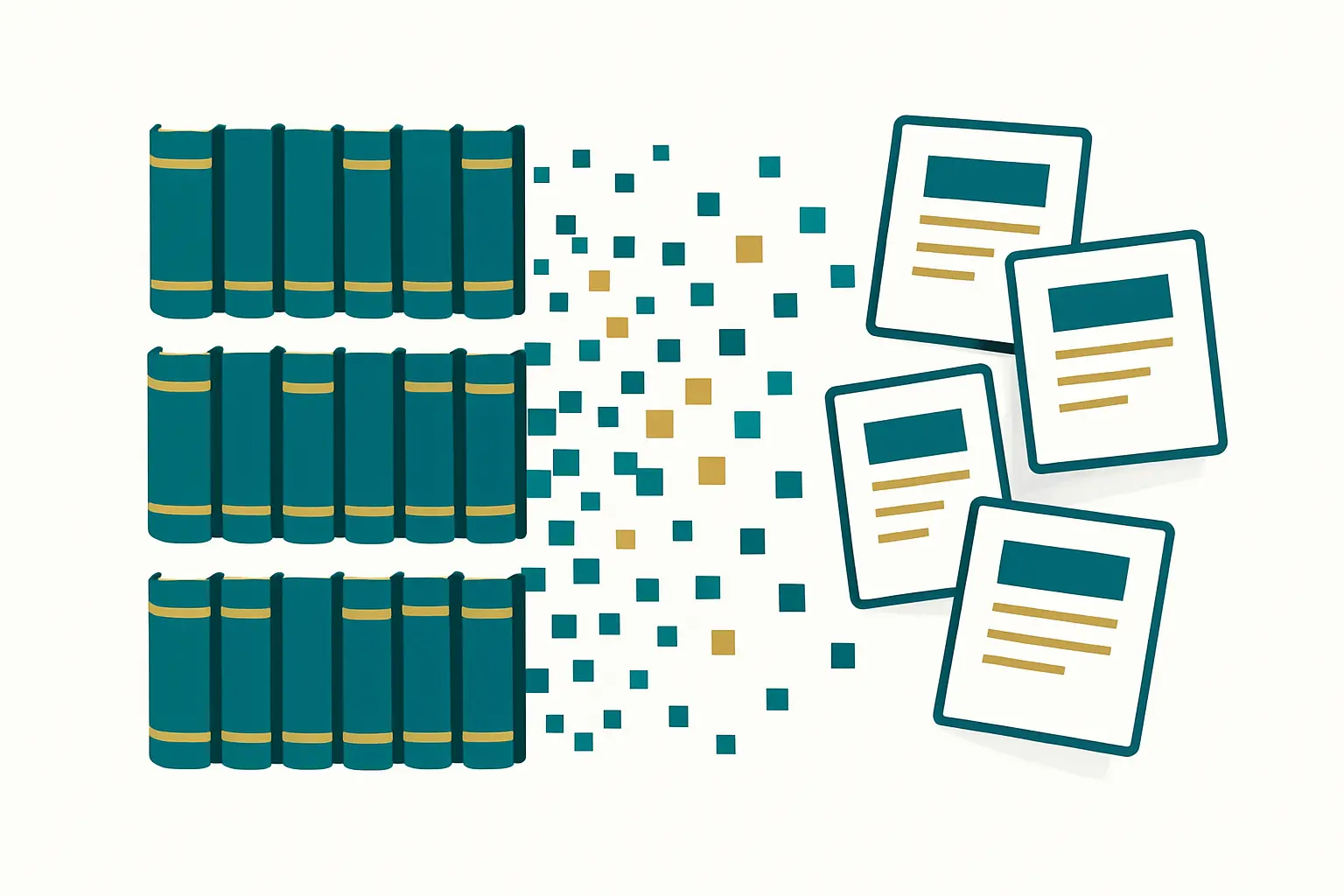
    Library shelves holding bound doctoral theses
    Deposit turns a bound volume in one university library into a nationally searchable record.

    How should you use Shodhganga while writing?

    Most scholars underuse it. Three uses are worth building into your routine.

    1. Check whether your topic has already been done. This is the single most valuable use, and it is best done before your synopsis is finalised. A thesis on your exact question at another Indian university is something your doctoral committee will expect you to know about.
    2. Study the expected structure. Reading two or three completed theses from your own discipline shows you chapter organisation, the depth of the literature review, and how methodology is presented in practice, which no general guide can convey precisely.
    3. Find methodological precedent. When you need to justify an instrument or sampling approach in an Indian context, a thesis that used it successfully in a comparable setting is a citable precedent.

    One caution. A thesis is student work that passed examination at one institution; it is not a peer-reviewed authority. Cite theses as prior research, and where a thesis quotes a theory you want to use, trace and cite the original source instead.

    Does deposit affect your ability to publish papers?

    This is the question that worries scholars most, and it deserves a careful answer rather than a reassuring one.

    Many journals accept manuscripts derived from a thesis already in a repository, treating the thesis as a recognised form of prior dissemination rather than duplicate publication. But policies differ between publishers, and some are stricter than others.

    The safe approach is to check the specific journal’s policy before submitting, disclose in your cover letter that the work derives from your deposited thesis, and ensure the article is genuinely reworked for a journal audience rather than a chapter with a new title. If you are planning several papers, raise the sequencing with your supervisor early, because it is easier to plan than to unpick.

    Can deposit be delayed or restricted?

    Many institutions have provisions for a temporary embargo where there is a genuine reason, such as a pending patent application, a commercial confidentiality agreement, or sensitive data. These provisions are set by your university rather than nationally, and they normally require a formal request with justification, usually supported by your supervisor.

    If your work involves anything patentable or contractually restricted, raise it well before submission. Embargo requests made after deposit are far harder to action than requests made before it.

    What should you check before your thesis is deposited?

    Because the deposited version is durable and public, run these checks on the exact file you hand over:

    • Personal data of participants. Confirm that no identifiable information appears in appendices, transcripts, consent forms or images. This is the most common serious problem and the hardest to remedy afterwards.
    • Third-party copyright. Figures, tables and long extracts reproduced from other sources need appropriate permission or attribution.
    • Your name and affiliation spelling. This record will be cited and indexed; inconsistent name forms fragment your scholarly record.
    • The final corrected version. Ensure the file incorporates every correction required by your examiners, not an earlier draft.
    • Similarity and integrity requirements. Confirm the undertaking and supervisor certificate required under the Regulations are complete, as covered in the guide to the UGC plagiarism limit for a PhD thesis.

    What if you cannot find your own thesis after graduating?

    Delays are common and usually administrative. Deposit depends on your university completing its side of the process after the degree is awarded, and backlogs happen.

    If your thesis has not appeared after a reasonable period, contact your university library or the designated Shodhganga coordinator at your institution rather than INFLIBNET directly. Deposits flow through the member university, so the university is where a missing record gets resolved.

    Does an older thesis being absent mean the topic is unstudied?

    No, and this is an important limitation to understand before you claim novelty. Coverage depends on when a university joined and how completely it has deposited its back catalogue, so older theses and those from some institutions may be absent.

    Treat absence from the repository as weak evidence. Before asserting that no one has studied your question in India, search institutional repositories, indexing databases and library catalogues as well. Claiming novelty that a committee member can disprove in one search is a bad way to begin a viva.

    From searching prior theses to writing your own

    Reading completed theses tells you what the finished object looks like. The harder task is producing one: converting your reading and data into chapters that argue rather than summarise. That work usually begins with the synopsis, and the process is set out in the guide on how to write a PhD synopsis for your doctoral committee.

    Tesify helps you develop each section from your own framework and notes, keeping structure and citation practice consistent as the document grows. You remain the author and are responsible for the content, the sources and their accuracy.

    Start building your thesis chapters in Tesify

    Frequently asked questions

    Is Shodhganga free to access?

    Yes. It is openly accessible online, which is the point of a national repository. You do not need an institutional login to search or read the deposited theses.

    Are Master’s dissertations included?

    The Regulations name Masters and research programme dissertations and theses in the deposit obligation. In practice, doctoral theses dominate what is available, and Master’s coverage varies considerably by institution.

    Can I cite a thesis from Shodhganga in my own thesis?

    Yes, citing it as an unpublished or repository-hosted thesis in the format your style requires. Include the author, year, title, awarding institution and the repository. Where the thesis itself cites a theory you want to use, go to the original source.

    Will my thesis appear immediately after my viva?

    No. The obligation runs from the award of the degree, not from the viva, and the Regulations allow one month after award for submission to INFLIBNET. Administrative delays beyond that are common.

    Can I remove my thesis later?

    Generally no. Deposit is a formal part of the degree process and the record is intended to be permanent. If there is a genuine legal or ethical problem, raise it with your university immediately, as the institution is the depositing party.

    Does deposit count as publication for career purposes?

    It is generally treated as making the work publicly available rather than as a peer-reviewed publication. For recruitment and promotion, peer-reviewed articles carry different weight from a deposited thesis, so plan publications separately.

    Will my similarity report be checked against Shodhganga?

    Detection tools compare against the repositories and databases in their coverage, and Indian theses being openly available means overlap with them is detectable. Never assume that copying from a thesis is safer than copying from a journal article.

    What file format is required?

    Requirements are set by your institution and by INFLIBNET’s submission guidance, and typically include a specific format, structure and metadata. Ask your library for the current checklist rather than assuming, since templates are updated periodically.

    Does every Indian university deposit theses?

    Participation is through membership, so coverage is not uniform. The Regulations create the obligation, but the completeness of any given university’s deposits varies, particularly for older material.

    Should I search Shodhganga before finalising my topic?

    Yes, and before your synopsis is approved rather than after. Discovering a closely similar completed thesis at the topic stage is a minor adjustment. Discovering it during your viva is not.

  • What Is the UGC Plagiarism Limit for a PhD Thesis?

    What Is the UGC Plagiarism Limit for a PhD Thesis?

    Under the UGC (Promotion of Academic Integrity and Prevention of Plagiarism in Higher Educational Institutions) Regulations, 2018, similarity up to 10% is classified as Level 0, meaning minor similarities with no penalty. Above that, three penalty levels apply. Your university may set a stricter internal limit, and where it does, the stricter figure governs your submission.

    These Regulations were notified in New Delhi on 23 July 2018 and published in the Gazette of India Extraordinary, Part III, Section 4. Everything below is taken from that text.

    What are the four levels of plagiarism?

    Clause 8 of the Regulations defines four levels in ascending order of severity:

    Level Similarity Classification
    Level 0 Up to 10% Minor similarities, no penalty
    Level 1 Above 10% to 40% Penalty applies
    Level 2 Above 40% to 60% Penalty applies
    Level 3 Above 60% Most severe penalty

    Note the wording carefully. The Regulations do not say that 10% is a target to aim for or a pass mark. They say similarities up to 10% attract no penalty. That is a different statement, and the difference matters when your report comes back at 9%: a low percentage does not certify that your work is free of plagiarism, only that the tool found little textual overlap.

    What are the penalties for a research scholar?

    For students, the Regulations specify:

    • Level 0 (up to 10%): minor similarities, no penalty.
    • Level 1 (above 10% to 40%): the student shall be asked to submit a revised script within a stipulated time period not exceeding six months.
    • Level 2 (above 40% to 60%): the student shall be debarred from submitting a revised script for a period of one year.
    • Level 3 (above 60%): the student’s registration for that programme shall be cancelled.

    Read Level 2 and Level 3 again, because scholars routinely underestimate them. Level 2 costs you a year. Level 3 ends your registration for the programme. These are not warnings.

    What are the penalties for faculty and supervisors?

    The Regulations set out a separate schedule for faculty, researchers and staff:

    • Level 1 (above 10% to 40%): shall be asked to withdraw the manuscript.
    • Level 2 (above 40% to 60%): shall withdraw the manuscript, shall be denied a right to one annual increment, and shall not be allowed to supervise any new Master’s, M.Phil. or PhD student for two years.
    • Level 3 (above 60%): shall withdraw the manuscript, shall be denied two successive annual increments, and shall not be allowed to supervise any new student for three years.

    Repeat offences are punished at one level higher than the level committed. Where a Level 3 offence is repeated, the Regulations provide for disciplinary action including suspension or termination under the institution’s service rules.

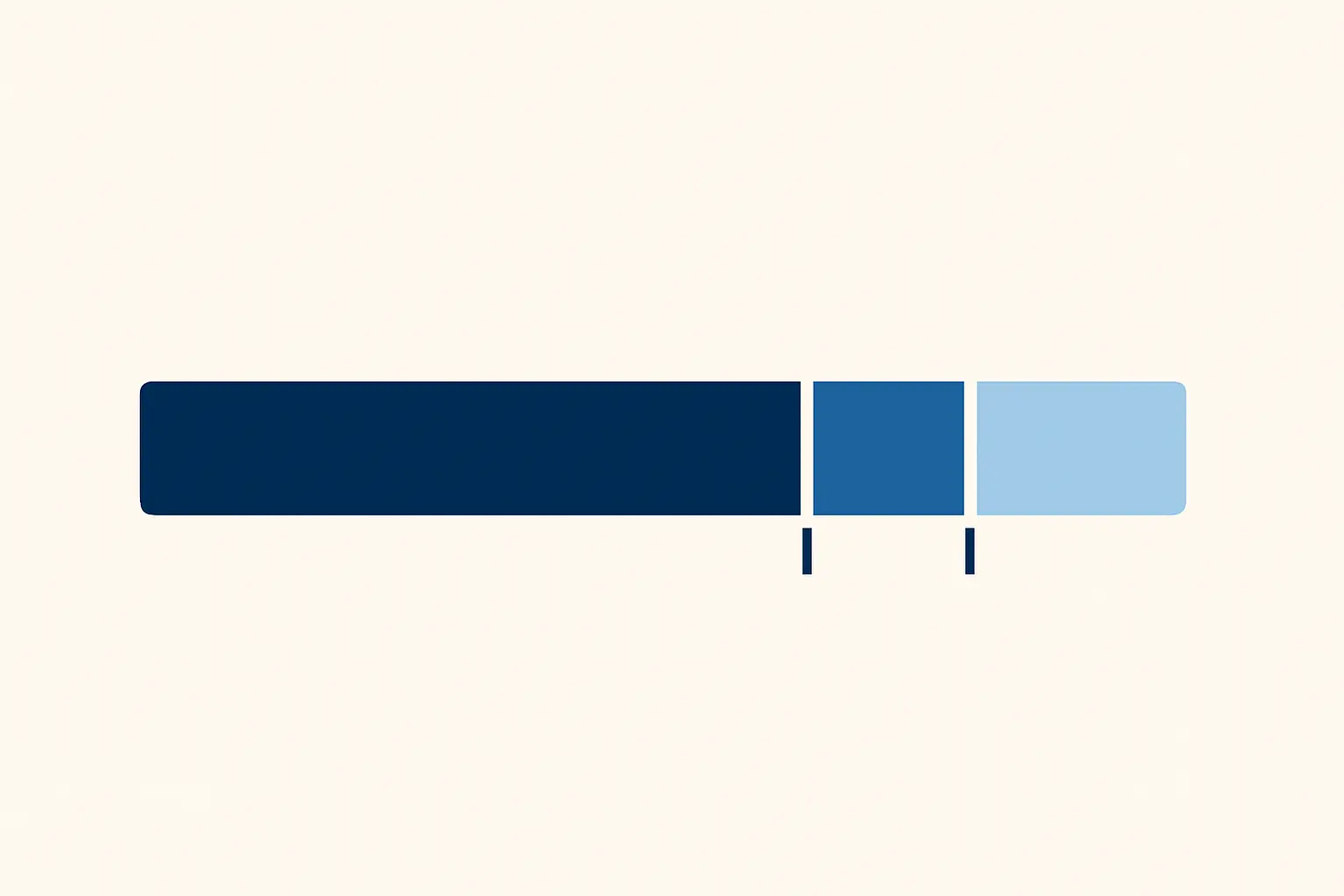
    Abstract illustration of tiered compliance levels
    Four levels, each with a defined consequence for students and a separate schedule for faculty.

    What is excluded from the similarity check?

    This is the clause most scholars have never read, and it is the one that most often explains an inflated percentage. Clause 7 states that similarity checks shall exclude:

    1. All quoted work reproduced with all necessary permission and/or attribution.
    2. All references, bibliography, table of contents, preface and acknowledgements.
    3. All generic terms, laws, standard symbols and standard equations.

    A note attached to the same clause adds two further points. First, the research work must be based on original ideas, and the Regulations specify that this covers the abstract, summary, hypothesis, observations, results, conclusions and recommendations, which shall not have any similarities. Second, the check excludes common knowledge or coincidental terms up to fourteen consecutive words.

    Two practical consequences follow. If your report was generated without excluding the bibliography and quoted matter, the percentage you are looking at is not the figure the Regulations describe. And if your overall percentage is low but the overlap sits in your results or conclusions, that is a far more serious problem than a higher percentage spread across your literature review.

    Does my university’s limit override the UGC figure?

    In practice, yes, where it is stricter. The Regulations require every higher educational institution to develop a plagiarism policy, get it approved by its relevant statutory bodies, and place the approved policy on the homepage of the institution’s website.

    That last requirement is useful to you: your university’s policy is supposed to be publicly available on its own website. Find it and read the actual figure and procedure that will be applied to your submission, rather than relying on what a senior scholar tells you. Departments within the same university sometimes apply different internal expectations.

    What else does the institution have to do?

    The Regulations place several obligations on institutions that affect you directly:

    • You must submit an undertaking stating that the document is your original work and free of plagiarism, and that it has been checked through a plagiarism detection tool approved by the institution.
    • Your supervisor must submit a certificate stating that the work done under their supervision is plagiarism free.
    • The institution must submit soft copies of all Masters and research programme dissertations and theses to INFLIBNET within one month after the award of degrees, for hosting in the Shodh Ganga e-repository.
    • The institution must maintain its own institutional repository including theses and publications.

    That third point is why your thesis becomes publicly searchable after your degree is awarded. What that means for you in practice is covered in the guide on what Shodhganga is and whether your thesis will be uploaded there.

    Which detection tool will be used?

    The Regulations require the use of a plagiarism detection tool approved by the institution, without mandating a specific product nationally. Different universities license different software, and different tools produce different percentages on the same document because their comparison databases and settings differ.

    This has a practical implication worth knowing before you panic about a number: a percentage from a free online checker is not comparable to the report your department will generate. Treat any self-check as an indication of where overlap sits, not as a prediction of the official figure.

    What should you do if your report comes back too high?

    First, read the report rather than the number. Identify whether the overlap sits in the literature review, the methodology, or the results and conclusions, because the Regulations treat originality in the results and conclusions as non-negotiable.

    Second, check whether the report was generated with the correct exclusions applied. A report that includes your bibliography and properly attributed quotations is inflating your figure against the standard the Regulations describe.

    Third, rewrite the flagged passages by reconstructing the idea in your own words and sentence structure rather than substituting synonyms. Word-swapping leaves the sentence architecture intact, which detection tools identify and examiners recognise immediately.

    If your submission deadline is close, the practical sequence for fixing this is set out in the recovery guide on writing and revising doctoral documents for committee review, which covers how to restructure text under time pressure without introducing new problems.

    Writing so that similarity is low because the work is yours

    The reliable way to keep a similarity report clean is not editing at the end. It is writing from your own synthesis in the first place: reading several sources, forming your own account of what they collectively establish, and writing that account rather than paraphrasing any single one.

    Tesify helps you build chapters from your own notes and framework so the prose is constructed rather than assembled, and keeps your citation practice consistent as the document grows. You remain the author, and you remain responsible for the integrity of every claim and citation.

    Start writing your chapter in Tesify

    Frequently asked questions

    Is 10% the pass mark for a PhD thesis?

    It is not a pass mark. The Regulations classify similarity up to 10% as Level 0, attracting no penalty. Your institution may apply a stricter internal threshold, and the nature of the overlap matters more than the number.

    Does the similarity percentage include my references?

    It should not. Clause 7 excludes references, bibliography, table of contents, preface and acknowledgements from the check. If your report includes them, the settings were not configured as the Regulations describe.

    Are properly cited quotations counted?

    Quoted work reproduced with necessary permission and attribution is excluded under Clause 7. That said, a thesis built largely from long quotations, even correctly attributed, raises a separate question about original contribution.

    What is the fourteen-word rule?

    The note to Clause 7 excludes common knowledge or coincidental terms up to fourteen consecutive words. It prevents standard phrasing and routine technical wording from being counted as plagiarism.

    Can my registration really be cancelled?

    Yes. For similarity above 60%, the Regulations state that the student’s registration for that programme shall be cancelled. This is the specified consequence at Level 3.

    Do these rules apply to Master’s students too?

    The Regulations address academic integrity across higher educational institutions and cover students, faculty, researchers and staff. The deposit obligation to INFLIBNET explicitly names Masters and research programme dissertations and theses.

    Does self-plagiarism count?

    Reusing your own previously published text without attribution is treated as a form of plagiarism in academic practice and will be flagged by detection tools. Cite your own earlier work as you would cite anyone else’s.

    Will paraphrasing software solve a high similarity score?

    It is a poor solution and often makes matters worse. Such tools frequently produce awkward or subtly incorrect phrasing while leaving the underlying structure recognisable, and you still have to defend every sentence in the viva. Rewrite from your understanding instead.

    Who decides whether plagiarism occurred?

    The Regulations provide for institutional academic integrity panels to examine cases and recommend action, with the institution’s head approving the outcome. The percentage triggers examination; a panel determines the finding.

    Where can I read the Regulations myself?

    They are published on the University Grants Commission website and in the Gazette of India Extraordinary, Part III, Section 4, notified in New Delhi on 23 July 2018. Reading Clauses 7 and 8 directly takes a few minutes and is worth doing before your final check.