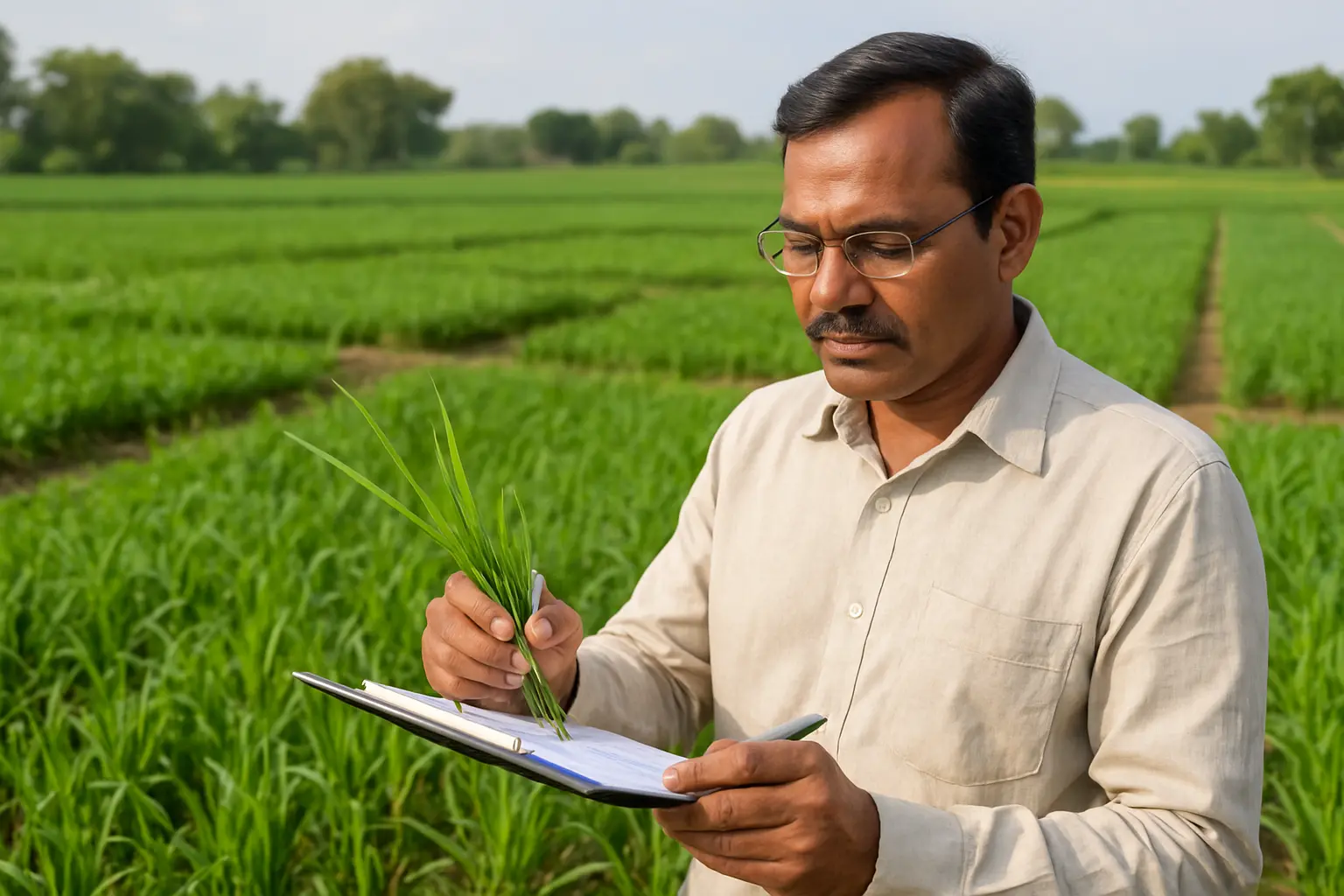
No single portal covers an Indian agriculture dissertation’s data needs — production and research data sit with ICAR, market prices sit with e-NAM, weather and agromet advisories sit with IMD, and landholding structure sits with the quinquennial Agriculture Census. Five official sources compared on what they hold, how current they are, and how a student actually gets in, checked at source in September 2026.
| Source | Custodian | What it holds | Access |
|---|---|---|---|
| ICAR portals (epubs.icar.org.in, institute sites) | Indian Council of Agricultural Research | Peer-reviewed research, institute datasets, crop trial data | Open access journal; individual institute datasets vary |
| e-NAM | Dept. of Agriculture, Cooperation & Farmers’ Welfare | Live and historical mandi price data by commodity | Public dashboards, no registration for price data |
| AGMARKNET | Directorate of Marketing and Inspection | Historical daily mandi arrivals and prices, longer archive than e-NAM | Public, searchable by commodity and market |
| IMD / Gramin Krishi Mausam Sewa (GKMS) | India Meteorological Department | Rainfall records, district-wise forecasts, agromet advisories | Public portal and Meghdoot Agro app |
| Agriculture Census | Ministry of Agriculture & Farmers Welfare | Landholding size, tenure, operational holdings, quinquennial | Published reports and tables, public |
ICAR: the research and institute-trial data layer
The Indian Council of Agricultural Research runs 70-plus research institutes and centres across crop science, horticulture, animal science and fisheries, and its open-access journal platform (epubs.icar.org.in) is the first stop for peer-reviewed Indian agricultural research a dissertation literature review should cite. Beyond published papers, individual ICAR institutes hold crop trial data, germplasm records and soil data relevant to their specialisation — access and format vary institute by institute, so a dissertation that needs institute-level trial data should approach the specific institute (the national rice research institute for a paddy trial, a horticultural institute for a fruit crop) directly rather than expect a single central ICAR dataset covering every crop.
e-NAM and AGMARKNET: market price data
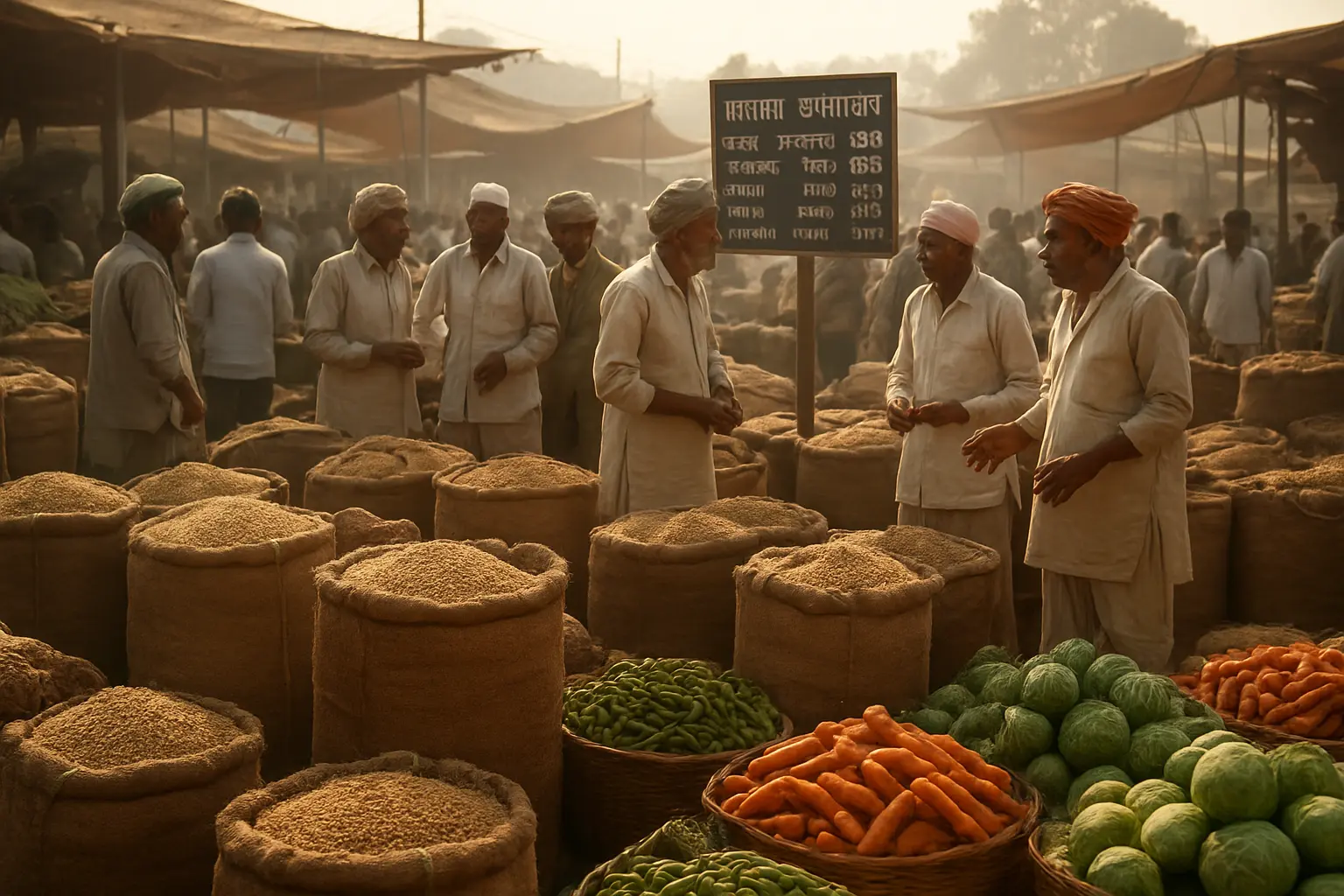
For a dissertation studying price volatility, market efficiency or farmer income, two government price platforms serve different needs. e-NAM, the National Agriculture Market platform run by the Department of Agriculture, Cooperation and Farmers’ Welfare, gives live and comparative mandi price data across registered markets and is built to support price-discovery research questions. AGMARKNET, run by the Directorate of Marketing and Inspection, holds a longer historical archive of daily arrivals and prices by commodity and market — the better source when a dissertation needs a multi-year price series rather than a current snapshot. Both are public and searchable without registration for price data itself, though check each portal’s current terms before scraping data programmatically rather than downloading through the provided export tools.
IMD and GKMS: weather and agromet data
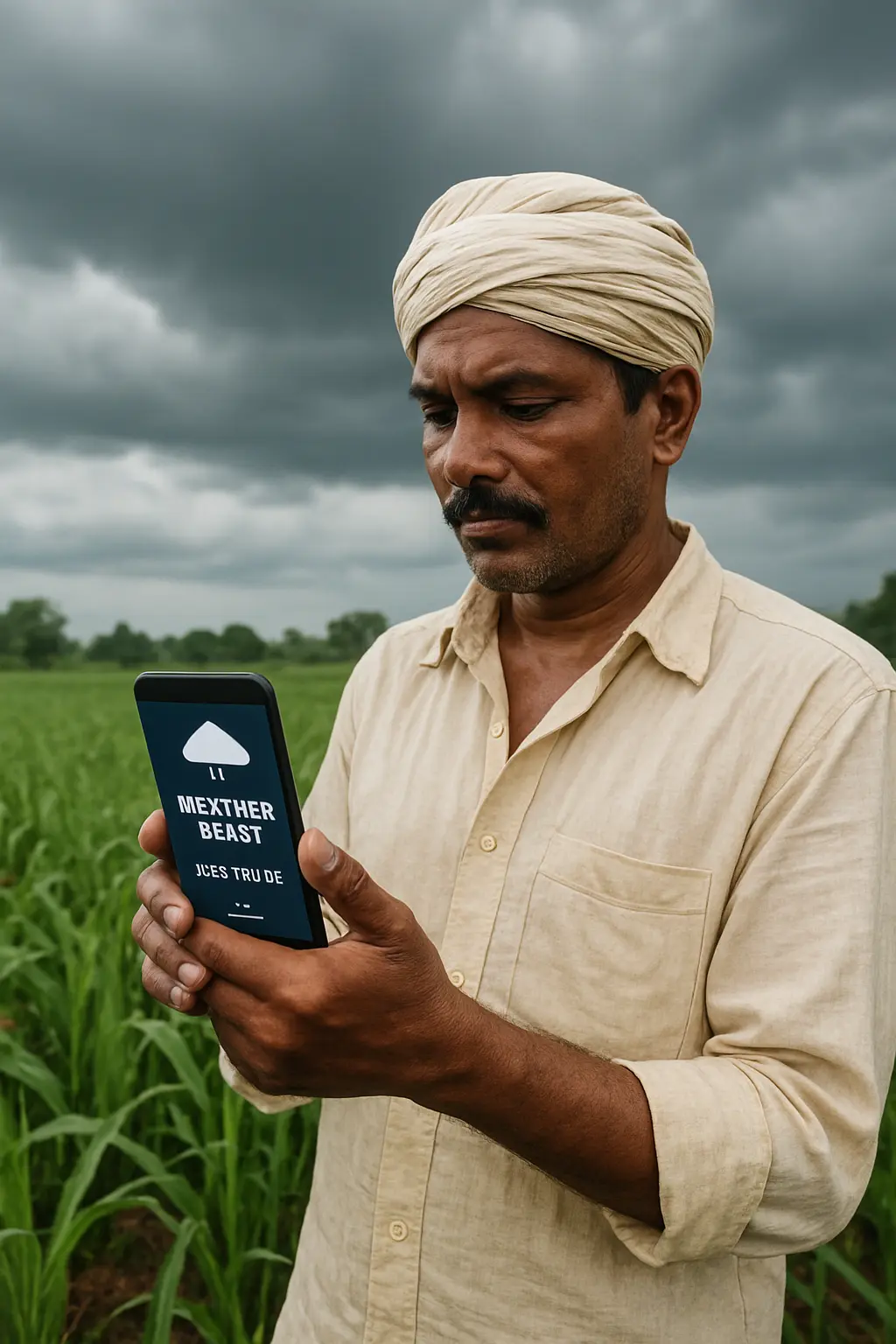
The India Meteorological Department, under the Ministry of Earth Sciences, provides the rainfall records, district-wise five-day forecasts and quantitative precipitation data most agronomy and climate-impact dissertations need. Its Gramin Krishi Mausam Sewa (GKMS) programme specifically packages weather data into agricultural advisories, and the associated Meghdoot Agro app is built for farmer-facing weather intelligence — a dissertation studying advisory uptake or the correlation between weather advisories and cropping decisions has a direct data source in GKMS records rather than raw meteorological data alone.
Agriculture Census: landholding and farm-structure data
The quinquennial Agriculture Census, conducted by the Ministry of Agriculture and Farmers Welfare, is the standard source for landholding size, tenure status and the structure of operational holdings across India — the dataset a dissertation on land fragmentation, tenancy patterns or farm-size economics is built around. Because the census runs on a roughly five-year cycle, always check the reference year of the most recent published round against your own study period, and state that reference year explicitly in your data-sources section rather than cite “the Agriculture Census” without a year, since successive rounds are not directly interchangeable for a time-trend analysis.
State-level and local sources: Krishi Vigyan Kendras and state agriculture departments
For a dissertation with a district or block-level focus, national portals often lack the resolution needed — this is where Krishi Vigyan Kendras (KVKs), the district-level agricultural extension centres run jointly by ICAR and state agricultural universities, and state agriculture department statistics offices become the practical data source. KVKs hold local adoption data, demonstration-plot results and extension-activity records that no national database captures at that resolution; contact the specific KVK covering your study district directly, with a formal request through your department, well before your data-collection window opens.
How to state a data source correctly in your methodology chapter
An examiner reading Chapter 3 wants four things stated for every dataset used, and a data-sources paragraph that skips any of them is a common source of avoidable questions at the viva: the exact portal or custodian by name, the reference period or year of the data pulled, the specific unit of observation (mandi-level, district-level, state-level), and any known limitation of that source for your specific question — a price series that excludes informal or unregulated market transactions, for instance, or a census round that predates a major policy change relevant to your study. A worked sentence that covers all four: “Mandi-level wholesale prices for [commodity] were obtained from AGMARKNET for the period [year range], covering [N] markets in [state]; the series does not capture farm-gate or informal-market transactions, which is addressed as a limitation in Chapter 5.”
Which dataset answers which question?
Matching your specific research question to the right custodian saves weeks of misdirected data requests:
| Your research question | Go to |
|---|---|
| Has a crop’s mandi price been volatile over the last five years? | AGMARKNET (longer historical archive) |
| What is today’s or this week’s price for a commodity across markets? | e-NAM (live and comparative dashboards) |
| Did a rainfall shortfall affect yield in a specific district and season? | IMD district rainfall records + GKMS advisories |
| How has average landholding size changed, or how fragmented is landholding in a region? | Agriculture Census (check reference year) |
| What variety or trial data exists for a specific crop under specific conditions? | The relevant ICAR institute directly |
| What adoption rate did a specific technology or practice see at block/district level? | The local Krishi Vigyan Kendra |
State Directorates of Economics and Statistics: the layer between national and local
Between the national portals above and hyper-local KVK data sits a layer most Indian agriculture dissertations underuse: each state runs its own Directorate of Economics and Statistics (DES) or equivalent agriculture-statistics office, publishing state-level crop production, area and yield estimates, often at a finer administrative resolution and faster publication cycle than national aggregates. A dissertation studying a specific state’s agricultural trends should check that state’s own DES publications alongside the national ICAR, e-NAM and Census sources above — state offices frequently publish district-level statistical handbooks that a national portal does not replicate. Contact details and publication archives vary by state; search for “[your state] Directorate of Economics and Statistics agriculture” directly rather than assume a single national equivalent exists.
Where this differs from the generic thesis data-sources guide
A general-purpose guide to Indian thesis data sources typically lists the Census, National Sample Survey and a handful of ministries without naming the agriculture-specific portals above — e-NAM, AGMARKNET, GKMS and the Agriculture Census round each answer a different agronomy or agricultural-economics question that the generic official-sources map does not resolve at this level of detail. Where to find data for your Indian thesis remains the right starting point for cross-disciplinary official sources; use this guide once your question is specifically agricultural.
Once you have identified your data source, the same sample-size and statistical-test decisions apply as in any quantitative Indian thesis; how to calculate sample size for a thesis and which statistical test should you use cover those decisions in the same evidence-first format as this data-sourcing guide. Tesify’s AI thesis assistant can help you build a data-sourcing section that names the specific portal, access route and reference year for every dataset in your methodology chapter, closing the vague-citation gap that costs marks at the viva — see how to choose a research topic by discipline for how the same source-specificity standard applies from the proposal stage.
Frequently asked questions
Do I need permission to use e-NAM or AGMARKNET price data in my dissertation?
Price data on both platforms is publicly viewable and searchable without registration; check each portal’s current terms of use before bulk-downloading or scraping data programmatically, since terms can differ from simply viewing individual price records through the interface.
How current is Agriculture Census data likely to be for my study?
Because it runs on a roughly five-year cycle, the most recently published round may be several years old relative to your fieldwork year — check the current latest published round on the Ministry’s portal directly and state that reference year explicitly rather than assume the census reflects present-day conditions.
Can I get raw plot-level ICAR trial data, or only published summary results?
This varies by institute — some ICAR institutes make trial datasets available on request for academic research, others publish only summary results in their journal papers. Contact the specific institute holding data relevant to your crop or region directly, through your department if possible, rather than assume open access.
Is IMD rainfall data available at district level, or only state or national level?
IMD publishes district-wise forecasts and rainfall information through its portal; check the specific resolution available for your study district and time period directly on the current IMD rainfall information pages, since coverage and granularity can vary by region and dataset.
What if my study district’s Krishi Vigyan Kendra does not respond to a data request?
Escalate through your department’s formal channel (a letter from your guide or head of department) rather than an informal email, and build in several weeks of lead time before your data-collection window — KVK data requests routed informally by an individual student are the most common point of delay reported by Indian agriculture dissertation scholars.
Should I cite the portal or the underlying government department as my data source?
Cite both — the specific portal (e-NAM, AGMARKNET, IMD) as the access point and the government department or ministry that operates it as the authoritative source, in the format your citation style specifies for a government or organisational data source.
Are e-NAM and AGMARKNET prices comparable across markets, or does methodology differ by state?
Reporting practices and the specific commodities and grades tracked can vary between mandis and states, so a cross-market comparison should check whether the price series being compared use the same commodity grade and reporting convention before treating the numbers as directly comparable, and note any discrepancy in your limitations section rather than assume uniform methodology nationwide.
Do I need to combine primary fieldwork data with these secondary sources, or can a dissertation rely on secondary data alone?
Both are accepted in Indian agriculture departments, but check your own department’s expectations — a purely secondary-data dissertation (built entirely from ICAR, e-NAM, IMD or Census sources) is more common in agricultural economics and policy-focused work, while agronomy and crop-science dissertations more often pair a secondary literature and data review with the student’s own field trial or survey data.