
The abstract and introduction of a Commerce dissertation are written last but read first, and examiners judge the whole document by them before reaching Chapter 1 properly. This guide walks through a defensible abstract of 150 to 300 words, the parts an introduction must contain, keyword selection, and a worked example built around a live B.Com and M.Com topic — digital payment adoption among retail consumers.
Step 1: Write the abstract only after the dissertation is finished
An abstract written before your findings exist is a plan, not a summary, and examiners can tell the difference on the first read — a results sentence that reads like a hope rather than a fact is one of the most common giveaways of an abstract drafted too early. Write it last, from your finished chapters, condensing rather than forecasting.
Step 2: Cover five things in 150 to 300 words
Most Indian commerce departments specify an abstract length in this range (check your own university’s format guideline, since the exact figure — commonly 150, 200 or 300 words — varies by institution). Within that limit, five elements carry the whole abstract:
- Background — one sentence naming the commercial or economic context (a market, a policy change, an industry trend)
- Objective — what the study set out to establish, stated as a single clear aim
- Method — sample, data source and analysis technique, named specifically (survey of N respondents, secondary data from a named source, a specific statistical test)
- Key finding — the one result that answers the objective, not every result in Chapter 4
- Implication — one sentence on who should care and why (a business, a regulator, future researchers)
A worked abstract at 180 words, built around a digital-payments topic:
Digital payment adoption among Indian retail consumers accelerated after demonetisation and UPI’s expansion, yet adoption remains uneven across age groups and city tiers. This study examines the factors influencing digital payment adoption among retail consumers in [City], using the Technology Acceptance Model as its theoretical base. A structured questionnaire was administered to 150 retail consumers across three market areas, and data were analysed using multiple regression in SPSS. Perceived usefulness and perceived ease of use were both significant predictors of adoption intention, while perceived risk showed a significant negative relationship, consistent with prior findings in emerging-market contexts. Trust in the payment provider moderated the relationship between perceived risk and adoption intention. The findings suggest that payment providers and retailers seeking to expand digital payment usage among first-time users should prioritise risk-reduction communication — clear refund and dispute-resolution information — over further ease-of-use improvements, which respondents already rated favourably. The study contributes evidence from a tier-2 Indian retail context, an area under-represented in existing digital-payment adoption literature.
Notice the pattern: one sentence per element, a named theoretical model, a named statistical technique, one headline finding, one implication — no hedge words, no unfulfilled promises about what the reader will find “explored” inside.
Step 3: Choose 4 to 6 keywords that actually locate your dissertation
Indian commerce dissertations commonly list 4 to 6 keywords beneath the abstract, used for library indexing and increasingly for AI-driven search and citation tools. Choose keywords a searcher would actually type, not a restatement of your title:
- The core construct (Digital Payment Adoption, not “Study of Payment”)
- The theoretical model, if one anchors your framework (Technology Acceptance Model)
- The population or context (Retail Consumers, Tier-2 Cities)
- The method, if distinctive (Structural Equation Modelling, Survey Research)
- Avoid repeating your exact title verbatim as a keyword string — it adds no discoverability the title itself does not already provide
Step 4: Open the introduction with the commercial context, not a dictionary definition
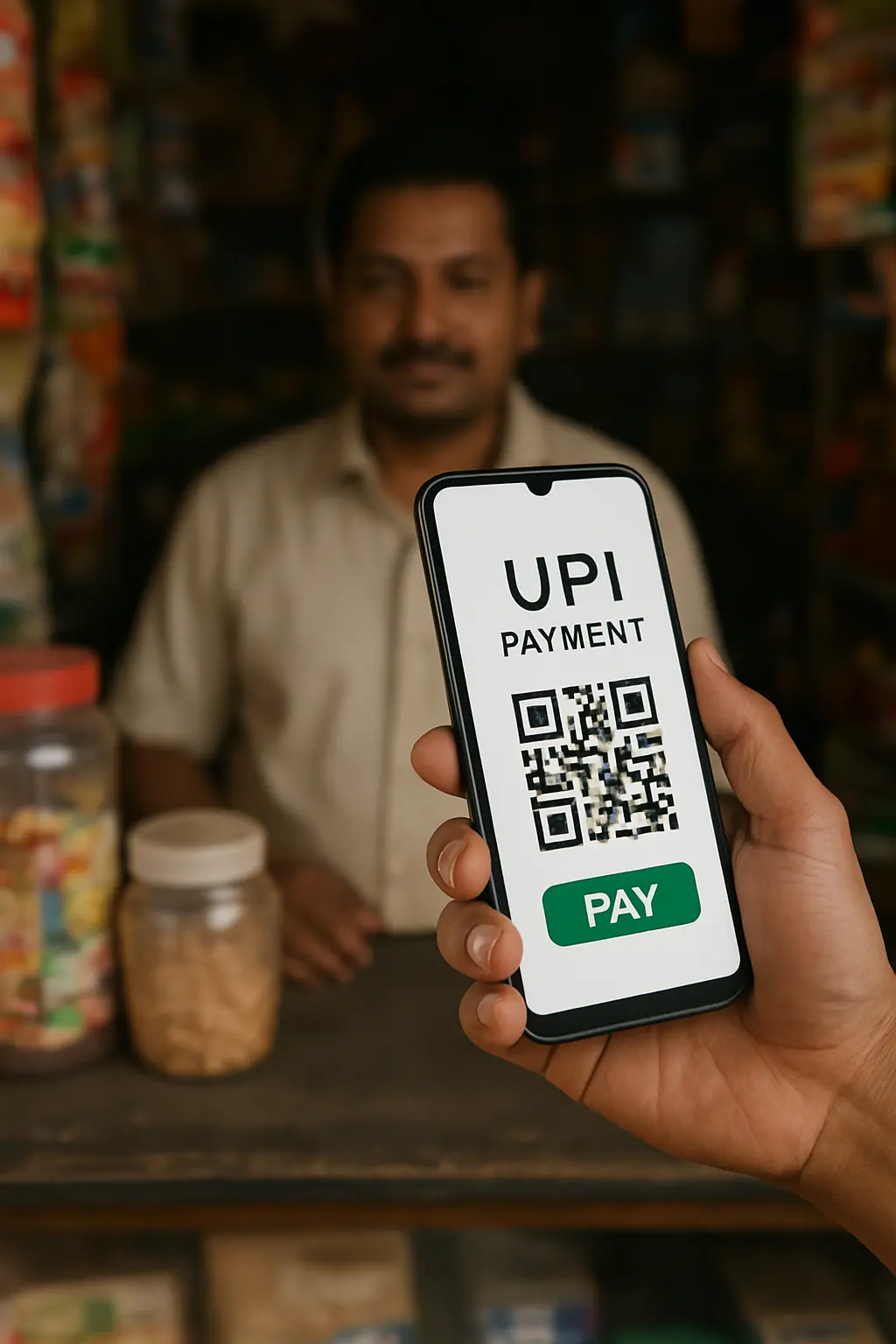
The single most common weak opening in Indian commerce dissertations is a definition sentence — “Digital payment refers to a mode of transaction…” — that adds nothing an examiner does not already know. A stronger opening states why the topic matters right now: a market shift, a regulatory change (a UPI transaction-limit revision, a GST rate change, an RBI circular), or a documented gap in how a sector operates. Save the formal definition, if you need one at all, for later in the same paragraph or the next.
Step 5: State the problem before the objectives
An introduction needs a clearly marked problem statement — what is not yet known, poorly understood, or contested — before it lists objectives, because objectives that are not visibly answering a stated problem read as arbitrary. A workable pattern: “While [prior work/context] establishes [what is known], it remains unclear whether [the specific gap]. This study addresses that gap by examining [your focus].”
Step 6: List objectives as short, measurable statements
Three to five objectives, each one a single verb-led statement an examiner can later check off against your findings chapter:
- To examine the factors influencing digital payment adoption among retail consumers in [City]
- To assess the relationship between perceived risk and adoption intention
- To evaluate the moderating role of trust in the risk–adoption relationship
Avoid an objective phrased as a question (“What factors influence adoption?”) sitting alongside objectives phrased as statements — pick one grammatical form and hold it throughout.
Step 7: State scope and significance explicitly
Scope tells the reader what the study does not cover — a specific city rather than the whole country, retail consumers rather than all payment users, a defined time window — and heading off that question yourself is stronger than letting an examiner raise it first. Significance is a short paragraph naming who benefits: retailers deciding where to invest in payment infrastructure, policymakers assessing adoption barriers, or the academic literature the study extends.
Step 8: Close the introduction with a one-paragraph chapter outline
A short closing paragraph telling the reader what each remaining chapter covers — “Chapter 2 reviews the literature on technology adoption models; Chapter 3 details the research methodology; Chapter 4 presents the analysis and findings; Chapter 5 discusses the implications and concludes the study” — is expected in most Indian commerce departments’ formats and costs only a few sentences.
Common mistakes that get an abstract sent back
Five patterns account for most abstract revisions requested by Indian commerce guides:
- Hedge language throughout — “the study attempts to explore” or “this may indicate” repeated across every sentence reads as a lack of confidence in your own finished work; state what you found, not what you hoped to find
- No method named — “data were collected and analysed” tells an examiner nothing; name the sample size, the data source, and the specific statistical technique
- Every finding crammed in — an abstract listing five separate results from Chapter 4 loses the headline finding among the detail; pick the one result that most directly answers your stated objective
- A restated title as the first sentence — “This study is about digital payment adoption among retail consumers” wastes the opening sentence that should carry the context instead
- Numbers without units or comparators — “adoption increased significantly” without a coefficient, percentage or comparison group leaves the claim unverifiable against your own results chapter
A worked citation example for the introduction
Most Indian commerce departments use APA style for in-text citation. A worked example inside an introduction paragraph: “Consumer trust has been shown to significantly moderate technology adoption outcomes in emerging markets (Sharma & Gupta, 2023).” — author surname(s), publication year, in parentheses, matching a full reference-list entry. For the mechanics of building the full reference list, how to cite in APA style for an Indian university thesis covers the format element by element.
Once your introduction and abstract are drafted, the chapters that follow — literature review, methodology and results — carry their own structure conventions; how to write a literature review and how to write the results chapter cover those in the same step-by-step format. If you are still deciding whether your project counts as a project report, a dissertation or a thesis under your university’s terms, thesis vs dissertation vs project report in India settles the vocabulary first. Tesify’s AI thesis assistant can draft an abstract from your finished chapters in this five-part structure and suggest keywords matched to how examiners and search engines actually query commerce dissertations, so the front matter reads as tightly as the analysis behind it — see how to format a thesis as per UGC guidelines for how the rest of the front matter should sit around it.
Frequently asked questions
How long should a Commerce dissertation abstract be?
Most Indian universities specify 150 to 300 words; check your own department’s format guideline for the exact figure, since it varies by institution and sometimes by degree level (B.Com project reports often sit at the shorter end, M.Com and M.Phil dissertations at the longer end).
Should the abstract include citations?
No. An abstract is a self-contained summary and conventionally carries no in-text citations or footnotes — reserve citation for the introduction and literature review.
Can the introduction and the literature review overlap?
They should not duplicate each other. The introduction sketches the context and states the problem in a page or two; the literature review that follows in Chapter 2 does the detailed, source-by-source engagement with prior studies. If your introduction is citing more than four or five sources in depth, that material likely belongs in Chapter 2 instead.
Do I need both an abstract and an executive summary?
Not usually for an academic dissertation — an executive summary is a business-report convention. Check your specific programme’s format guideline; most Indian B.Com and M.Com dissertation formats call for an abstract only, unless the project is explicitly framed as a consultancy-style report.
Is it acceptable to state a null or unexpected finding in the abstract?
Yes, and doing so honestly is better than the alternative. If perceived ease of use was not significant in your model, the abstract should say so plainly rather than omit it or overstate a marginal result — examiners cross-check the abstract against Chapter 4 and a mismatch is a flagged inconsistency.
How many keywords should a Commerce dissertation list?
Four to six is the common range in Indian commerce departments; check your own format guideline, since some universities specify an exact number.
Should the introduction state my hypotheses, or only my objectives?
Convention varies — some Indian commerce departments expect hypotheses stated in the introduction, others reserve them for the methodology chapter. Where your objectives imply a testable relationship (perceived risk and adoption intention, for instance), stating the corresponding hypothesis near the objectives makes the logical chain easier for an examiner to follow, even if your department’s template places the formal hypothesis list in Chapter 3.
Does a B.Com project report need the same abstract structure as an M.Com dissertation?
The five-part structure — background, objective, method, finding, implication — holds at both levels, but expect the B.Com version to compress the method and finding into fewer, simpler sentences, since B.Com project reports typically use smaller, more descriptive studies than an M.Com or M.Phil dissertation’s inferential analysis.
Can I reuse the abstract wording in my conclusion chapter?
Reuse the key finding and implication, but do not paste the abstract in verbatim — a conclusion chapter has room to state the finding with the supporting detail and caveats an abstract’s word limit forces out, and an examiner who reads both back to back notices identical phrasing as a sign of thin revision.