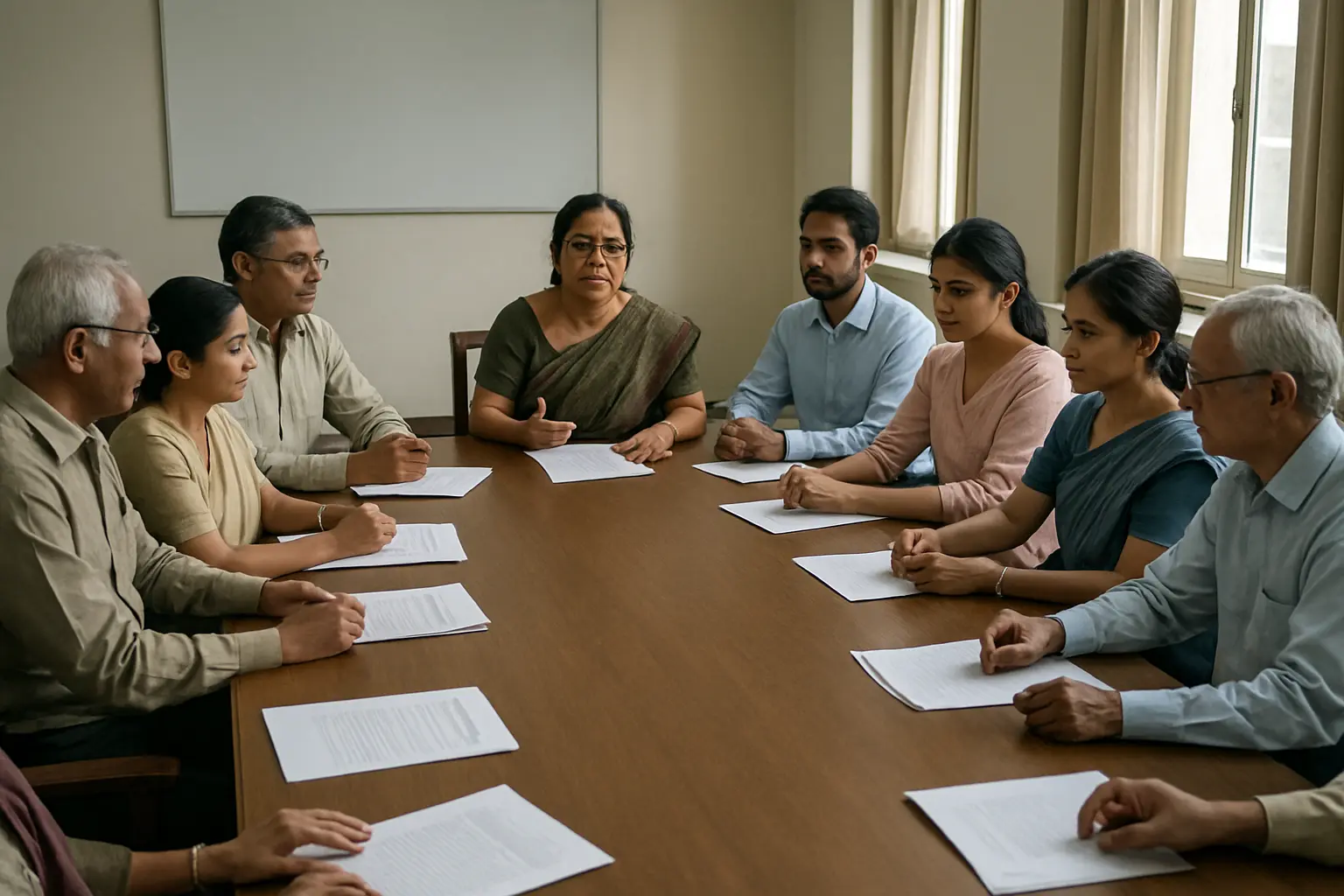
Ethics clearance is the step most Indian scholars discover late, usually the week they planned to start collecting data. It is also the step where the internet is most confidently wrong, because the guideline everyone cites has a scope clause that half of all theses fall outside. This guide works through the eight steps in order, and starts by establishing which rules actually bind your study.
Step 1: Work out which rulebook actually applies to you
The document everyone quotes is the Indian Council of Medical Research’s National Ethical Guidelines for Biomedical and Health Research Involving Human Participants (2017). Read its scope clause before assuming it governs your work. It states:
“These guidelines are applicable to all biomedical, social and behavioural science research for health conducted in India involving human participants, their biological material and data.”
The two words that matter are for health. A nursing study, a public-health survey, a psychology experiment on stress, a study of patient adherence — all squarely inside. A study of working-capital management in listed firms, teacher motivation in secondary schools, or consumer preference for a payment app is health research only if you have framed it that way. Those studies are not ungoverned; they are governed by your university’s ordinance and its ethics committee’s terms of reference, not by a national biomedical instrument. Claiming ICMR compliance for a management dissertation reads as boilerplate to any examiner who knows the document; naming your institution’s committee, its approval number and its date reads as fact.
Expected output: one sentence you can defend, of the form “This study was reviewed by [named committee] under [named policy].”
Step 2: Find your committee — and know what to do if there isn’t one
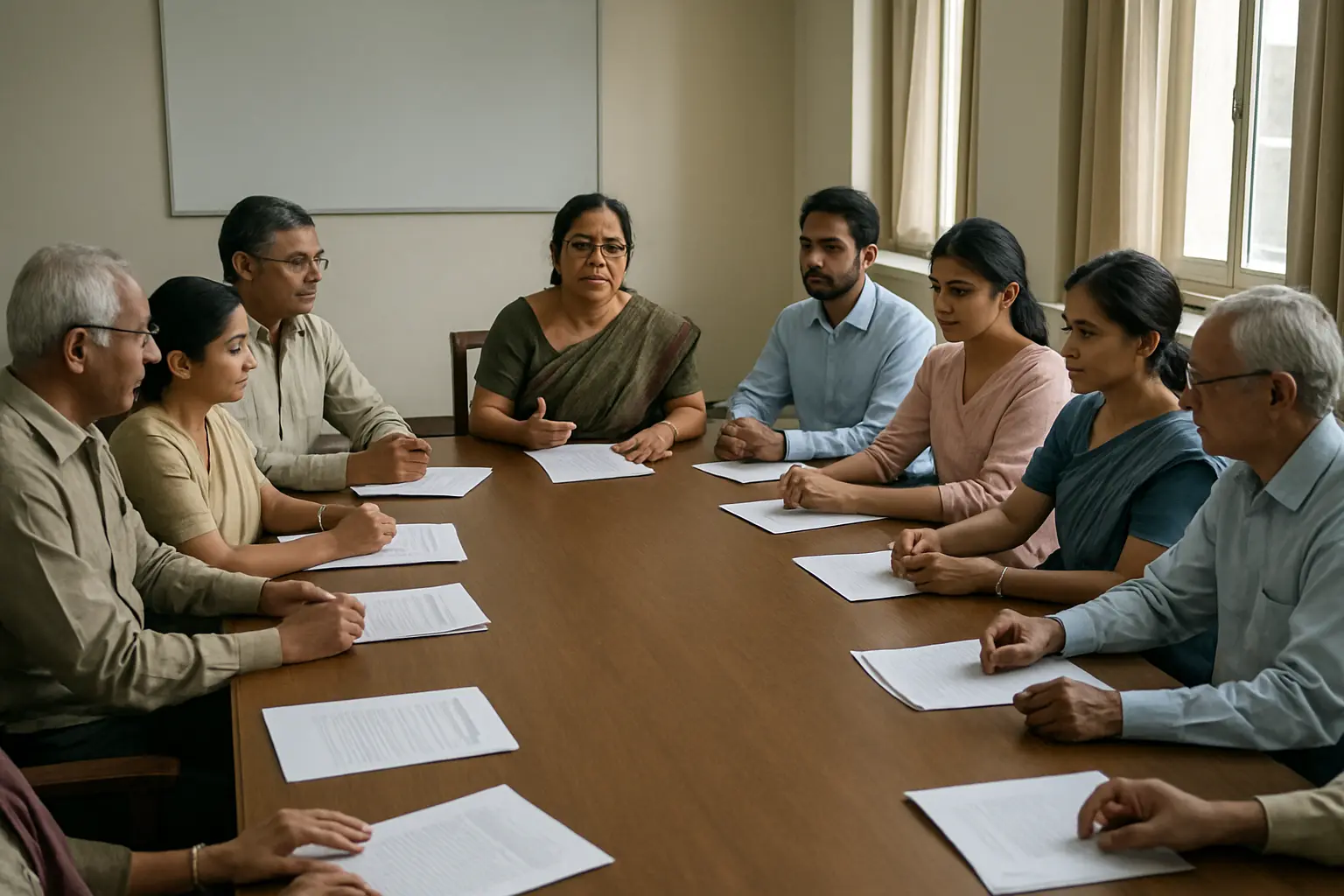
Most Indian universities and medical colleges run an Institutional Ethics Committee (IEC), sometimes called an Institutional Review Board. Larger institutions run more than one; the guidelines expressly permit an institution to have multiple committees, each functioning as a stand-alone body with its own standard operating procedures.
If your department genuinely has no committee, there is a documented route. The guidelines allow a “user institution” to use the ethics committee of a “host institution”, preferably nearby, provided the two enter into a memorandum of understanding — or the user institution issues a No Objection Certificate and agrees to be overseen by the host committee. The host committee then gets access to all research records, including source documents and participants, for continuing review.
Where a study is a clinical trial under the Drugs and Cosmetics Act, the guidelines require the reviewing committee to be registered with the Central Drugs Standard Control Organisation. For ordinary academic research that is not a regulated trial, which registration applies is a question for the committee, not for you.
Step 3: Stop trying to decide whether you need approval
This is the rule that catches the most scholars, and it is stated flatly in clause 4.8.3:
“A researcher cannot decide that her/his proposal falls in the exempted, expedited or full review category. All research proposals must be submitted to the EC. The decision on the type of review required rests with the EC and will be decided on a case-to-case basis.”
You may request that your proposal be treated as exempt, with justification. You may not classify it yourself and proceed. A student who collected data first and applied for retrospective clearance is in the worst position available: the committee cannot approve what has already happened, and a journal or examiner asking for the approval date will find it falls after the fieldwork.
Expected output: a submitted application, with an acknowledgement number, dated before your first participant contact.

Step 4: Understand the three review tracks, so you can predict your timeline
The guidelines set out three categories in Table 4.2, with worked examples. Knowing which one you are likely to land in tells you whether you are waiting days or waiting for the next full meeting.
| Track | Applies to | Examples given in the guidelines |
|---|---|---|
| Exemption from review | Less than minimal risk, no linked identifiers | Research on data already in the public domain for systematic reviews or meta-analysis; observation of public behaviour recorded without linked identifiers; institutional quality-control audits; comparison of instructional techniques, curricula or classroom management methods |
| Expedited review | No more than minimal risk | Non-identifiable specimens or clinical documentation; amendments to an approved protocol including change of researcher; minor deviations causing no or minimal risk; progress reports where activity is limited to data analysis |
| Full committee review | Everything above minimal risk, and anything not covered by the other two | Research involving vulnerable populations, even at minimal risk; studies involving deception of participants; amendments involving altered risk; major protocol deviations and violations |
Two consequences for planning. An expedited review can be conducted by the chairperson, member secretary and one or two designated members, so it does not wait for a quorum. A full committee review does: a meeting is valid only if the quorum is met, and the guidelines set that quorum at a minimum of five members present, including at least one non-affiliated member. If your study touches a vulnerable population, assume the full-meeting calendar and work backwards from it.
Step 5: Assemble the application pack
Committees publish their own checklists and you must use your own committee’s, but the substance is consistent across Indian institutions. Expect to submit:
- The application form, signed by you and countersigned by your research supervisor.
- The full protocol — objectives, design, sampling frame and size, instruments, analysis plan. This is usually your approved synopsis with the methodology expanded; do not submit a version that contradicts what your Research Advisory Committee approved.
- The instrument itself — questionnaire, interview schedule, observation grid — in every language you will actually use.
- The participant information sheet and the informed consent form, also in every language of administration.
- Permission letters from any organisation, school, hospital or community you will recruit through.
- Your curriculum vitae and your supervisor’s, and often evidence of a completed research-ethics course.
- A data-management statement — where the data will live, who can see it, how long you will keep it, and how it will be destroyed.
If your instrument is an adapted or translated standardised scale, include the permission or licence and say which version you are using. Committees routinely return applications where an established scale appears with no provenance — and a reviewer who asks that question will also ask about the reliability of the adapted version.
Step 6: Write the consent documents properly — they are two documents, not one
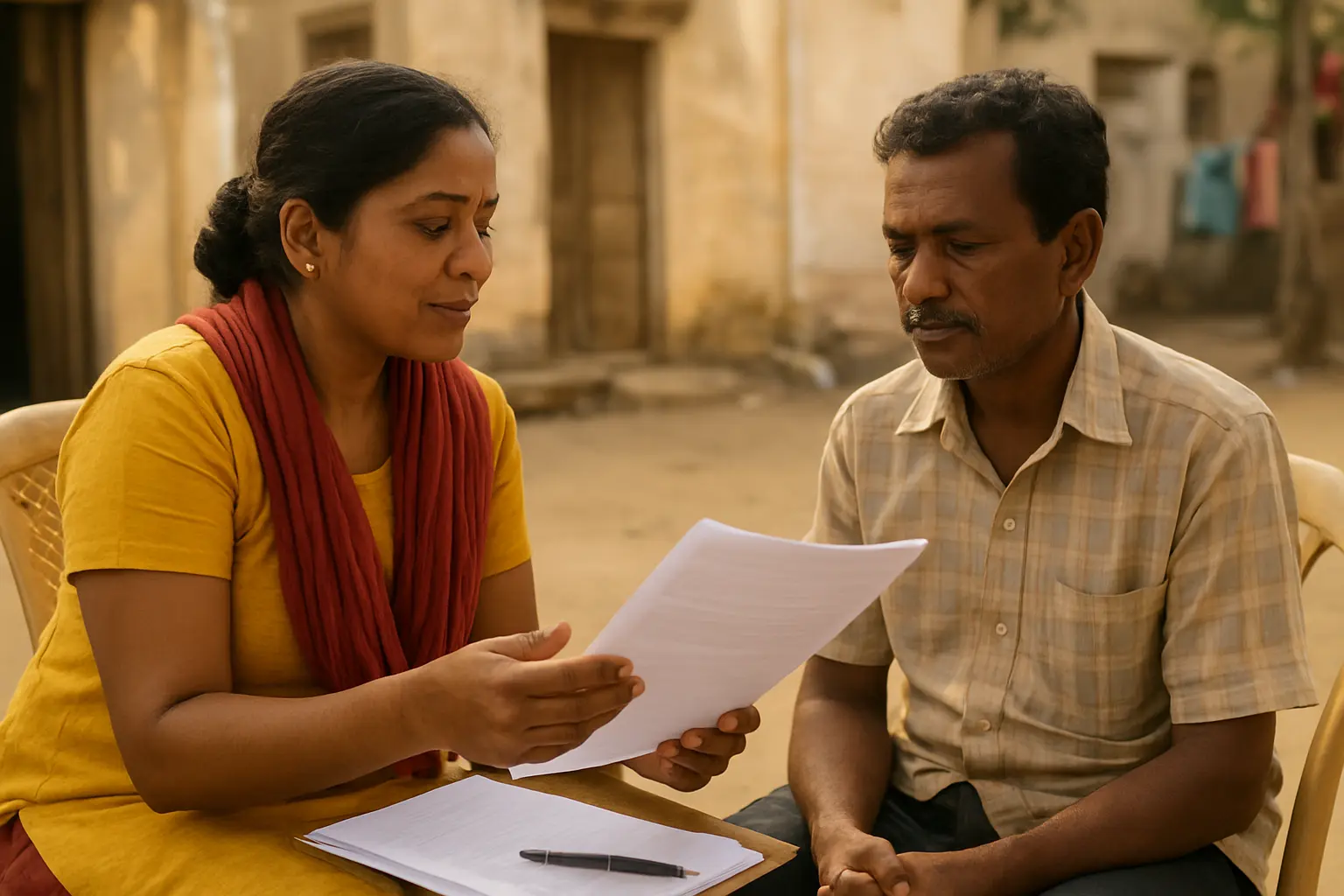
The guidelines are specific: the informed consent document has two parts, a participant information sheet (PIS) and an informed consent form (ICF). The information must be given in a language the participant can understand, and it must be scientifically accurate, simple, and sensitive to the participant’s social and cultural context.
Box 5.1 lists the essential elements of a consent form. The first six are: a statement that this is research; the purpose and methods in simple language; the expected duration of participation and frequency of contact, with the estimated number of participants and the types of data collection; the benefits reasonably expected; any foreseeable risks, discomfort or inconvenience; and the extent to which confidentiality of records can be maintained, including the limits of what you can actually safeguard. Additional elements apply by study type — pre- and post-test counselling where the research could lead to a stigmatising condition, insurance coverage where applicable, and the storage period and future uses of biological material and data.
Worked example: the opening of a participant information sheet
Study title: Workplace stress and coping strategies among staff nurses in tertiary care hospitals in Coimbatore district
Invitation. You are being invited to take part in a research study conducted for a doctoral thesis. It is not part of your hospital duties and it is not an assessment of your work.
What the study is about. The study examines the sources of work-related stress reported by staff nurses and the coping strategies they use. Around 320 nurses across four hospitals will take part.
What taking part involves. You will complete one questionnaire, on paper or on a tablet, which takes about 20 minutes. You will be contacted once. There is no follow-up.
Risks and discomfort. Some questions ask about stress and low mood and you may find them uncomfortable. You may skip any question. Contact details for the hospital counselling service are at the end of this sheet.
Confidentiality and its limits. Your name will not be recorded on the questionnaire. Completed forms will be stored in a locked cabinet and the electronic file on a password-protected computer accessible only to me and my supervisor. Data will be reported only in aggregate. I cannot guarantee anonymity within your own ward if you discuss your participation with colleagues.
Voluntary participation. Participation is entirely voluntary. You may withdraw at any point before submitting the questionnaire without giving a reason and without any consequence for your employment.
The consent form itself is then short: a numbered list of statements the participant initials, a signature, a date, and a signature of the person who conducted the consent discussion. Give the participant a copy of both documents.
Step 7: Submit early, and plan around the committee’s calendar
The single most useful question to ask your member secretary is when the committee meets and what the cut-off date for the next agenda is. An application that misses the cut-off by two days waits a full cycle, and a full cycle is commonly a month or more.
Build the wait into your schedule rather than treating it as a delay. The weeks between submission and approval are the right time to pilot instrument wording with colleagues rather than participants, finalise your secondary data sources, and settle your target sample so you are not renegotiating it after approval. Changing the sample after approval means an amendment, and an amendment is another review.
Step 8: Keep the approval alive, and report it correctly
Approval is not a one-time stamp. Committees perform continuing review, which is why progress and annual reports appear in the expedited-review list. Changing the instrument, the sites, the sample size or the researcher requires an amendment; minor deviations causing no or minimal risk go through expedited review, and anything that alters risk goes to the full committee.
In the thesis itself, one paragraph in the methodology chapter carries the whole thing: the name of the committee, the approval reference number, the date of approval, the consent procedure used, and the language or languages in which consent was taken. If any participants were minors or otherwise unable to consent, state the assent and legally acceptable representative procedure separately. Format the reference to the guidelines in whichever citation style your department requires, and keep the approval letter as an annexure.
Frequently asked questions
Do I need ethics approval for a survey-based management dissertation?
Almost certainly yes, but from your university’s committee under its own ordinance, not under the ICMR guidelines, whose scope is biomedical, social and behavioural research for health. Ask your department which committee reviews non-health research; most institutions route everything through one IEC.
Can I say my study is exempt and skip the application?
No. Clause 4.8.3 of the ICMR guidelines states that a researcher cannot decide her or his own proposal is exempt, expedited or full-review; all proposals must be submitted, and the committee decides. You may request exempt treatment with justification.
What if my institution has no ethics committee?
The guidelines permit a user institution to use another institution’s committee, preferably nearby, under a memorandum of understanding or a No Objection Certificate, with the host committee taking on the review responsibilities and record access.
How long does ethics clearance take in India?
There is no national service standard. The practical determinant is your committee’s meeting calendar and which review track your proposal is assigned to. Expedited reviews can be handled by the chairperson, member secretary and one or two designated members; full committee review waits for a quorate meeting.
How many members does an ethics committee need?
The guidelines recommend seven to fifteen members, multi-disciplinary and multi-sectoral, preferably with half from outside the institution. Quorum is a minimum of five members present, including at least one non-affiliated member, and no decision is valid without quorum. The head of the institution should not be a member, and instead acts as appellate authority.
Do I need to register my study anywhere?
Only if it is a clinical trial. The guidelines require all clinical trials to be registered with the Clinical Trials Registry – India, a requirement made mandatory by the drug regulator in June 2009. An ordinary academic survey or interview study has no national registry obligation.
Does secondary data analysis need clearance?
Research on data already in the public domain, for systematic reviews or meta-analysis, is one of the examples the guidelines place in the exemption category — but you still submit it and let the committee make that call. Identifiable secondary data is a different matter entirely.
What language must the consent form be in?
A language the participant is able to understand. In a multilingual field site that means preparing and submitting every language version you will actually use, not English with an intention to translate on the spot.
Do I have to write about ethics in the thesis if my study was exempt?
Yes. Record that the proposal was submitted, the reference number, and the committee’s determination. “No approval was needed” is a claim you should never make on your own authority; “the committee determined the study was exempt from review on [date]” is a fact.
Where can I read the guidelines myself?
The ICMR National Ethical Guidelines for Biomedical and Health Research Involving Human Participants (2017) is published by the Indian Council of Medical Research and available as a free PDF. Section 4 covers ethical review procedures and Section 5 the informed consent process.
Getting the approved protocol into the thesis
The application pack you have just built — protocol, instruments, consent documents, permissions, data plan — is most of your methodology chapter already, written in a different order. Scholars lose weeks re-authoring it because the two documents live in separate files and drift apart the moment the committee asks for an amendment.
Tesify keeps the protocol, the chapters and the reference list in one project, so an amendment approved by the committee updates the methodology chapter instead of creating a second version of the truth. Start free while you are waiting for your approval letter.