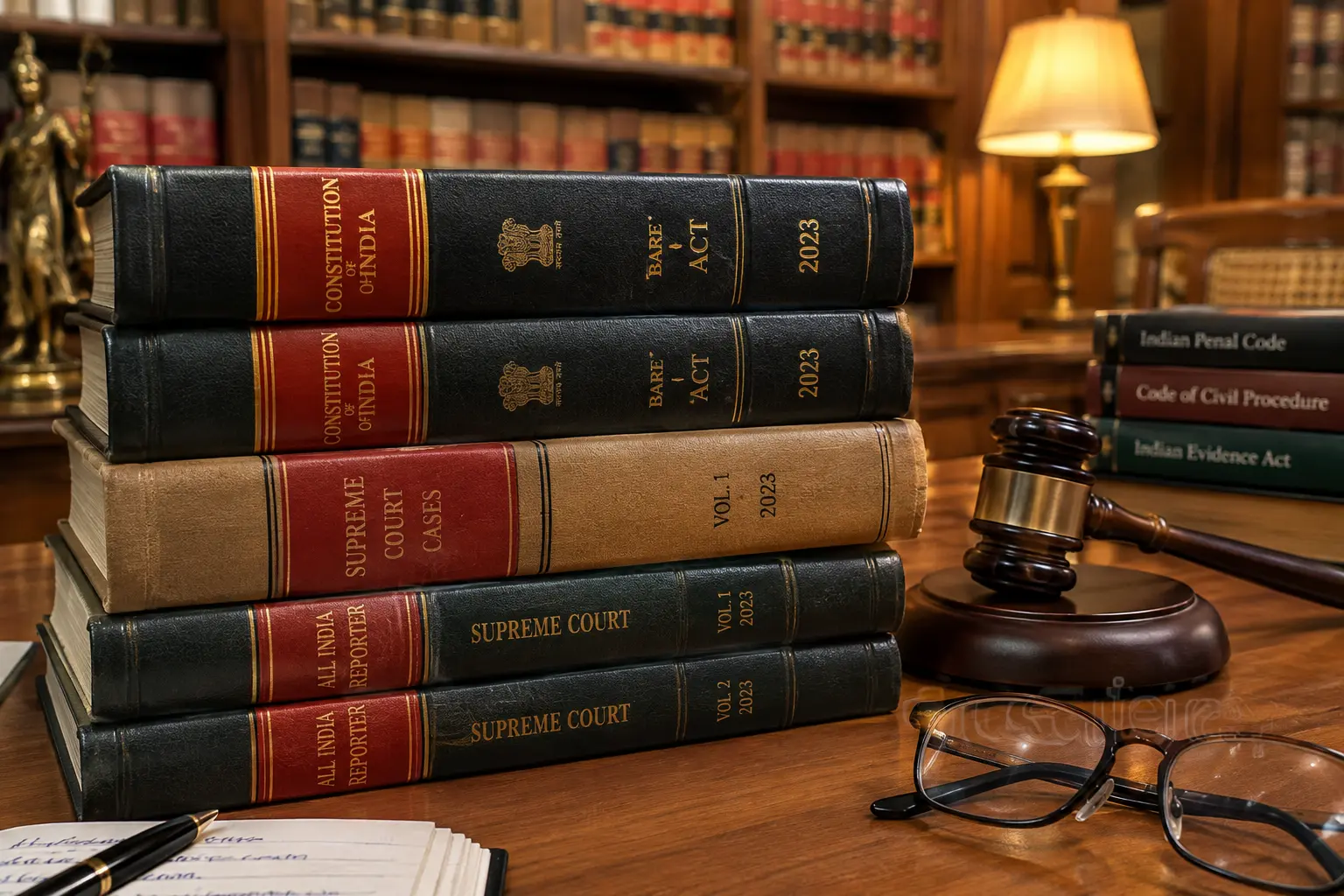
LL.M. dissertations get sent back most often for five reasons: a research problem that is not really a legal problem (no live ambiguity, conflict or gap in the law), a method that does not match the claim (calling doctrinal analysis “empirical” or vice versa), case law used as summary rather than analysis, citations that do not follow the Indian Law Institute’s format for statutes and judgments, and comparative-law claims made without a real second jurisdiction actually examined. Every one of these is fixable before submission, and every one is a structural defect a committee catches in the first ten pages — not a matter of prose quality.
Why Is “No Real Legal Problem” the Most Common Objection?
A legal dissertation needs a live legal question: a genuine ambiguity in statutory language, a conflict between two lines of judicial reasoning, an unsettled point after a recent ruling, or a gap where the law has not caught up with a new fact pattern (technology, a new kind of transaction, a new harm). “A study of consumer protection law in India” is a subject, not a problem — it has no question a dissertation can actually answer. Committees push back hardest on proposals that describe a legal area rather than isolate a specific unresolved question inside it. The fix is almost always narrowing: not “arbitration law in India” but “how far a court may modify, rather than only set aside, a domestic award under Section 34 of the Arbitration and Conciliation Act, 1996, now that the Supreme Court’s Constitution Bench in Gayatri Balasamy v. ISG Novasoft Technologies Ltd. (30 April 2025) has recognised only a limited power to modify.”
Why Do Examiners Reject a Doctrinal/Empirical Mismatch?
Most LL.M. dissertations in India are doctrinal — reasoning from statutes, case law and legal principle, without primary data collection. That is a legitimate, respected method, and there is no need to apologise for it. The objection arises when a dissertation calls itself doctrinal in Chapter 1 but then makes empirical-sounding claims it never tested — “most litigants find this provision confusing,” “in practice, courts rarely apply this test” — without a single interview, survey or case-outcome dataset behind the claim. The reverse also happens: a dissertation that actually did collect data (a small survey of practitioners, a sample of judgments coded for outcome) but never states a method chapter explaining the sample, the coding scheme, or the limitations. State your method honestly in Chapter 1, and never let the prose claim a kind of evidence the method chapter did not produce.
Why Does “Case Summary, Not Case Analysis” Get Flagged Repeatedly?
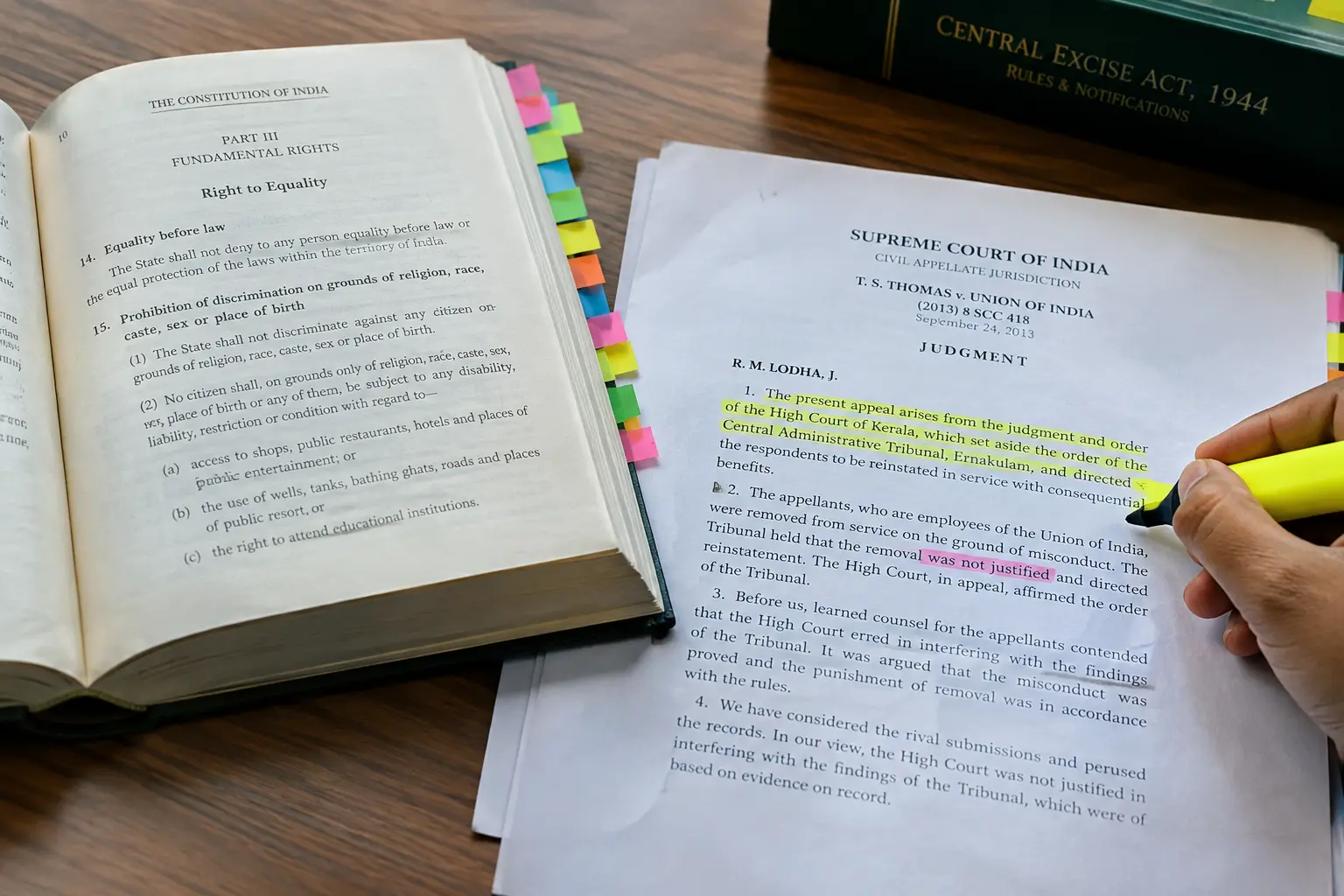
A chapter that walks through five judgments — facts, holding, facts, holding — reads like a case digest, not a dissertation. What an examiner wants after each case: what specific proposition does this case stand for, does it agree or conflict with the cases before it, and what does that agreement or conflict mean for your research question. The test is simple to apply to your own draft: after summarising a judgment, does the next sentence use the word “because,” “however,” or “in contrast to” — connecting the case to your argument — or does it just move to the next case? If it is the latter throughout a section, the section is a summary and will be marked as one.
Why Do Citation Errors Specifically Sink Legal Dissertations?
Legal writing has its own citation apparatus, and APA — the default most non-law departments teach — does not cover it. APA’s legal-reference examples are built around United States courts and statutes plus a few United Nations materials, and Purdue OWL’s APA legal-references guidance notes that most legal materials are cited in Bluebook style, adding plainly that legal conventions may differ outside the US. For an Indian LL.M. dissertation the working apparatus is the Indian Law Institute’s own Citation Style — statutes, constitutional provisions, cases, law reports and unpublished dissertations each have their own rule, reproduced rule by rule in our guide to citing Indian Acts and judgments. A dissertation that cites a Supreme Court judgment the way it cites a journal article — author, year, title, in parentheses — reads as though the writer has never opened a law report, regardless of how sound the underlying argument is.
Why Does Outdated Law Get Caught Immediately?
An LL.M. examiner is a subject specialist, and a superseded provision, a repealed section, or a judgment later overruled is the fastest way to lose credibility with that reader — faster than a weak argument, because it signals the literature review itself was not current. Before your viva, re-check every statute you cite against its latest amendment, and re-check every case you rely on for a subsequent overruling, reference, or distinguishing judgment. This is not optional due diligence; it is the first thing a specialist examiner checks, because it costs them nothing to check.
Why Does a Comparative-Law Chapter Get Sent Back Even When the Writing Is Good?
“Comparative” in a dissertation title obliges you to actually work with a second jurisdiction’s primary sources — not a secondary summary of what “US law generally says,” but the actual statutory text or a specific line of case law from the second jurisdiction, cited in that jurisdiction’s own convention. A chapter that describes Indian law in depth and then adds two paragraphs on “the position in other countries,” sourced from a law-firm blog or a general encyclopaedia entry, is not comparative law — it is Indian law with a decorative appendix. If your title promises a comparison, budget real time to read the second jurisdiction’s own sources, or narrow the title to drop the comparative claim.
A worked illustrative contrast, labelled fictional: a weak comparative sentence reads “Many countries have moved towards stricter data-localisation requirements, as seen in the EU and elsewhere.” A defensible one reads “Chapter V of the EU’s General Data Protection Regulation channels cross-border transfers principally through an adequacy decision of the European Commission under Article 45, or an appropriate safeguard such as standard data protection clauses under Article 46 — a mechanism absent from India’s own cross-border transfer provision: Section 16(1) of the Digital Personal Data Protection Act, 2023 instead uses a negative-list model, under which the Central Government may, by notification, restrict transfer to a country or territory outside India.” The second sentence names the specific provisions, states what each actually requires, and draws the precise contrast the first sentence only gestures at.
What Do Structural and Formatting Objections Look Like?
- No clear research questions or hypotheses tied to the legal problem — objectives that restate the topic rather than pose an answerable question.
- A literature review that lists sources rather than positions them — no statement of where existing scholarship agrees, disagrees, or has not yet addressed your specific question.
- Missing or inconsistent citation of primary legislation — quoting a section without stating which Act, year and (where relevant) which amendment.
- A conclusion that summarises rather than answers — restating each chapter instead of stating, in direct language, what the research question’s answer actually is.
How Should You Prepare for the Viva Given These Objections?
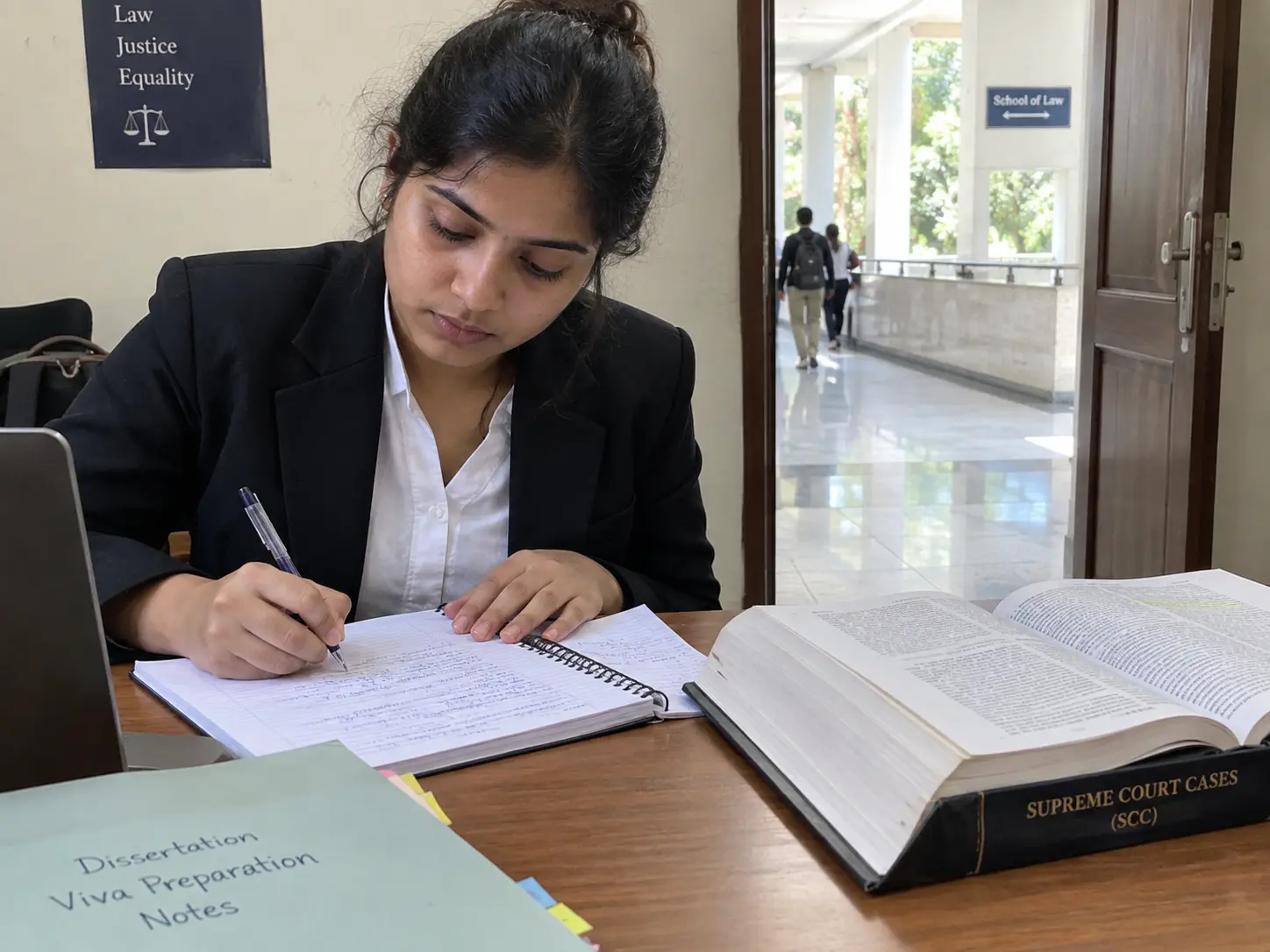
Anticipate the exact five questions this article opens with, phrased for your own topic: What precisely is the unresolved legal question? What method did you use, and did every claim in the dissertation stay inside what that method can support? For your three or four central cases, can you state in one sentence each what proposition they stand for and how they relate to each other? Where did each citation’s format come from? If your title uses the word “comparative,” what primary source did you read from the second jurisdiction? A candidate who can answer these five cleanly has already answered most of what an LL.M. viva panel actually probes.
How Does This Differ From the Structure Guide or the Worked Specimen?
The chapter-by-chapter structure an LL.M. dissertation needs — including the ILI citation apparatus in full — is in our LL.M. dissertation structure guide, and a complete, section-by-section annotated specimen is in our worked LL.M. dissertation example. This article does a narrower, later-stage job: the specific objections a committee raises once a draft already exists, so you can self-audit before submission rather than discover them at the viva. Where to find the primary legal databases and official portals this whole process depends on is covered separately in our comparison of Indian legal research databases.
The five objections above are structural — they show up whether the prose is polished or not, and they are exactly what a committee reads for first. Tesify helps you structure an LL.M. dissertation around a real legal question, keep citations in ILI format from the first draft, and hold your method and your claims consistent chapter to chapter. Used by 9,000+ students. Write your thesis with Tesify.
Frequently asked questions
What is the single most common reason an LL.M. dissertation gets sent back?
A research problem that describes a legal subject rather than isolates a specific, unresolved legal question — an ambiguity, a conflict in case law, or a genuine gap. Everything else on this list is usually a symptom of that first failure.
Is it wrong to write a purely doctrinal LL.M. dissertation?
No — doctrinal analysis of statutes and case law is a legitimate, standard method for an Indian LL.M. The objection arises only when the prose makes empirical-sounding claims (about practice, frequency, or litigant behaviour) that the doctrinal method never actually tested.
Why can’t I just use APA citation for case law?
APA’s legal-reference examples are built around United States courts and statutes, and most legal materials are cited in Bluebook style — APA has no built-in format for an Indian Act or a Supreme Court of India judgment. Indian LL.M. departments expect the Indian Law Institute’s own Citation Style for statutes, cases and law reports.
How do I check whether a statute I am relying on is still current?
Check the Act’s own amendment history — most current Indian legislation is available with amendment notes via the eGazette or the relevant ministry’s own portal — and re-verify any case law you cite for a later overruling, review, or distinguishing judgment before your final draft and again before the viva.
What actually makes a chapter “comparative law” rather than just describing another country in passing?
Working directly with the second jurisdiction’s own primary sources — its statutory text or its own case law, cited in that jurisdiction’s convention — rather than a secondary summary. If you have not read a primary source from the second jurisdiction, do not call the chapter comparative.
How do I fix a literature review that lists sources instead of engaging with them?
For every source, state explicitly where it agrees or disagrees with another source you have already discussed, and end the review with a sentence naming exactly what none of the existing literature has yet addressed — that sentence becomes your research gap.
Can I still fix these problems if my draft is already complete?
Yes — all five are diagnosable and fixable in the existing text: sharpen the problem statement, align every claim to your stated method, add analytical connectors between case summaries, convert citations to ILI format, and re-verify currency. None requires starting over.
Will an examiner really check every citation format?
Not every one individually, but a consistent pattern — APA-style parenthetical citations used for judgments throughout — is visible on the first page it appears and signals the whole dissertation was not built on legal-citation convention, which invites closer scrutiny everywhere else.
What should I actually say in the viva if my method has a genuine limitation?
State it directly and specifically — what the doctrinal method could not establish, or what a small sample size means for generalisability — rather than avoiding the question. Examiners read a candidate who names their own limitation precisely as more credible, not less.