
Two questions sink more Psychology dissertation timelines than a weak research question ever does: how long will ethics review actually take, and what will the scale licences and software actually cost. Both are answerable in advance, and both are routinely left blank until they become emergencies. Here is a week-by-week plan and an illustrative budget to fill in before you commit to a submission date.
The Timeline: Sixteen Weeks, Backward-Planned
Most Indian M.A./M.Sc. Psychology and M.Phil dissertations run inside a two-semester window, and the plan below assumes a sixteen-week active-research period after your synopsis is approved — adjust the exact week counts to your own department’s calendar, but keep the order and the buffer weeks, since those are what protect a deadline from a single slow approval.
| Weeks | Phase | What actually happens |
|---|---|---|
| 1–2 | Instrument finalisation | Confirm the validated scale(s) you will use, request permission from the scale’s author or publisher if required, and finalise the demographic proforma. |
| 2–5 | Ethics submission and review | Submit to your Institutional Ethics Committee; this phase has the widest variance of any on this timeline and should never be compressed — see the note below. |
| 5–6 | Pilot testing | Administer the instrument to a small group resembling your sample, check reliability (Cronbach’s alpha) on the pilot data, and revise any item that performed poorly. |
| 6–10 | Main data collection | Administer the finalised instrument to your full sample; build in at least one buffer week here for non-response and follow-up. |
| 10–12 | Data cleaning and analysis | Score the instrument, screen for missing data and outliers, run the planned statistical tests, and re-run reliability analysis on the full dataset. |
| 12–14 | Results and discussion drafting | Write Chapter 4 (results) directly from your analysis output, then Chapter 5 (discussion), relating findings back to your literature review. |
| 14–15 | Full draft review with guide | Submit the complete draft for your guide’s comments; build in a full week for this round, since guides are reading multiple students’ drafts simultaneously at this point in the term. |
| 15–16 | Revision and formatting | Incorporate feedback, format to your department’s specification, and complete the similarity check before binding and submission. |

Why the Ethics Phase Cannot Be Compressed
Of every phase on this timeline, ethics review is the one scholars most reliably underestimate, because its duration depends on a committee’s meeting schedule, not on how quickly you can write an application. If your Institutional Ethics Committee meets monthly, and your submission narrowly misses a meeting date, the delay is not “a few days” — it is until the next scheduled meeting, which can be four to six weeks away. Submit as early as your instrument allows, ask your department’s ethics office directly for the committee’s meeting calendar before you plan backward from your submission date, and never assume a “fast-track” or expedited review will apply to your study unless your committee has told you explicitly that it does. The general ethics-clearance process most Indian committees follow, including the consent form and review categories, is covered in our guide to getting ethics committee clearance for an Indian thesis.
An Illustrative Budget
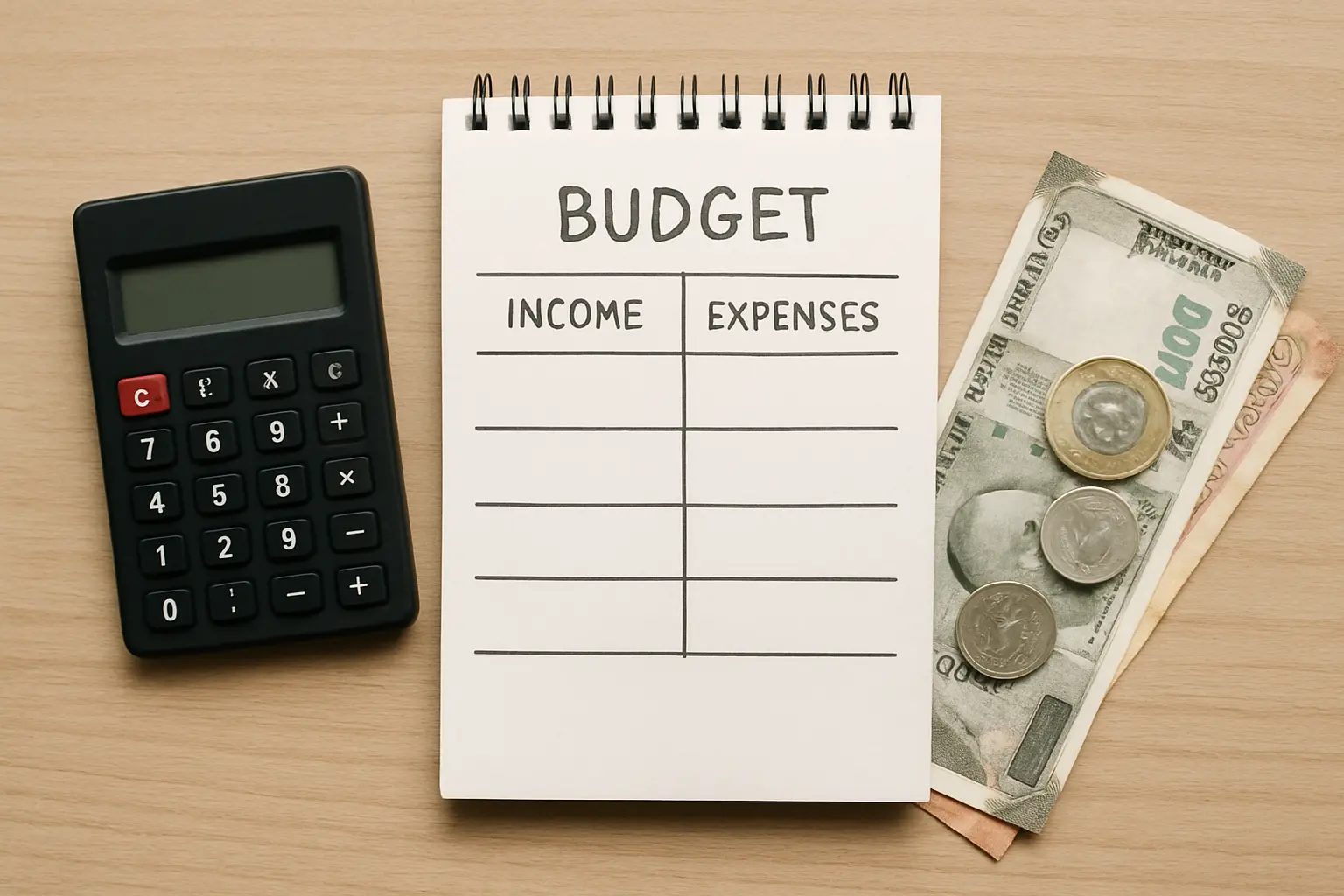
Costs vary by department, city and whether your institution already licenses the tools below — treat every figure as illustrative and replace it with what you actually confirm, not what this table assumes.
| Item | Illustrative cost range | Notes |
|---|---|---|
| Validated scale licence (if required) | ₹0 (freely available for academic use) to a per-use or per-study licence fee set by the publisher | Many widely used scales (for example, several public-domain or freely available-for-research instruments) cost nothing for non-commercial academic use — check the publisher’s terms before assuming a fee applies. See our comparison of validated scales for a psychology dissertation in India for what is free versus licensed. |
| Statistical software | ₹0 (Jamovi/JASP, free) to a subscription for SPSS if your department does not provide a campus licence | Confirm your department’s SPSS access before budgeting for a personal licence — see our SPSS vs JASP vs NVivo software comparison for current options and prices. |
| Printing and binding (multiple drafts + final copies) | A few hundred to a few thousand rupees depending on page count and the number of bound copies your department requires | Ask your department how many bound copies are required (often three to five: department, library, guide, examiner, personal) before printing more than needed. |
| Travel for data collection | Variable — local transport if your sample is reachable on campus or nearby; higher if travel to multiple sites is needed | Build this into your timeline as well as your budget — travel time competes with data-collection time. |
| Participant incentives (if used) | Institution-dependent; some Indian ethics committees restrict or require disclosure of incentives | Confirm with your ethics committee whether incentives are permitted before including them in either your budget or your consent form. |
| Transcription (for a mixed-methods or qualitative component) | Free if self-transcribed (time cost instead); a per-hour fee if outsourced | Self-transcription is slower but keeps identifying data out of a third party’s hands — factor this trade-off into your timeline, not just your budget. |
Where the Budget and the Timeline Interact
A cost you have not confirmed is also a timeline risk you have not accounted for — a scale that turns out to need a paid licence, discovered only after your synopsis is approved, can stall data collection for weeks while permission or payment is arranged. Confirm every instrument’s licensing status during the instrument-finalisation phase (weeks 1–2 above), not after your ethics application has already named it. The same applies to software: if your department’s SPSS licence is unavailable during your exact data-collection window (a common issue with shared campus licences during peak dissertation season), knowing this in week 1 lets you plan around it with a free alternative rather than discovering it in week 10.
Adjusting the Timeline for a Qualitative or Mixed-Methods Design
The sixteen-week plan above is built around a single-timepoint quantitative survey, the most common Psychology dissertation design in India, but it needs real adjustment for other designs, not just a relabelling of the same weeks. A qualitative interview-based study replaces the pilot-and-main-collection block (weeks 5–10 above) with a slower, more iterative sequence: piloting the interview guide with one or two participants (a week), then conducting interviews one at a time with transcription and initial coding running in parallel rather than after all data collection finishes — a design that typically needs the full data-collection-through-analysis span extended by three to four weeks compared with a survey, because coding cannot meaningfully begin until several transcripts exist, and later transcripts often prompt revisiting the coding scheme applied to earlier ones. A mixed-methods design needs both timelines running with a planned integration point, usually placed after the quantitative analysis and the qualitative coding have each reached a stable stage, and should be planned as two parallel tracks on your calendar rather than one track with an extra step tacked onto the end.
Building Contingency Into Every Phase, Not Just Ethics
Ethics review gets the most attention as a delay risk, correctly, but it is not the only phase that regularly runs over. A pilot that reveals a genuinely confusing item can add a week while it is rewritten and re-piloted. A sample that recruits more slowly than expected — common when relying on convenience sampling through personal networks rather than an institutional list — can extend the main data-collection window by two weeks or more. A statistical result that does not behave as the literature predicted (a non-normal distribution, an unexpectedly low reliability coefficient) can add days to the analysis phase while you diagnose and, where legitimate, address it. None of these individually sinks a dissertation, but a timeline built with zero slack anywhere treats each one as a crisis rather than an absorbed delay — building roughly ten to fifteen per cent slack into the data-collection and analysis phases specifically, where the most variance genuinely occurs, is a more realistic plan than an unbroken sixteen-week sequence with no room to breathe.
Common Timeline Mistakes
- Planning from a fixed submission date backward without a buffer. A sixteen-week plan with zero slack fails the moment any single phase — most often ethics review — runs long.
- Starting data collection before the pilot is analysed. A poorly performing item caught only after the main data collection cannot be fixed retroactively; the pilot phase exists specifically to catch this before it is expensive.
- Underestimating the guide-review round. A full draft does not get same-day feedback, especially during peak submission weeks when a guide is reading several students’ work at once.
- Treating the budget as an afterthought. A scale’s licensing fee or a software subscription discovered late in the timeline is both a cost and a delay — resolve both together, early.
Frequently Asked Questions
How long does Institutional Ethics Committee review actually take in India?
There is no fixed national duration — it depends on your specific committee’s meeting frequency and current submission volume. Ask your department’s ethics office for the committee’s meeting calendar directly rather than assuming a standard turnaround.
Can I start pilot testing before ethics approval?
Generally no — most Institutional Ethics Committees require approval before any data collection involving human participants, including a pilot. Confirm this explicitly with your own committee, since practice can vary.
What if my validated scale turns out to require a paid licence I did not budget for?
Contact the publisher or copyright holder directly to confirm the exact academic-use terms before assuming a cost — many scales have free-for-academic-research provisions that are not obvious from a quick search, and your department’s library may already hold a licence covering student use.
Is sixteen weeks realistic for every Psychology dissertation design?
It is a reasonable planning baseline for a single-timepoint survey design with one round of data collection; a longitudinal, experimental or mixed-methods design with multiple data-collection waves needs a correspondingly longer timeline, planned the same way but with more phases, and should be discussed with your guide at the proposal stage rather than assumed to fit the same sixteen weeks.
How do I handle a delay in the ethics committee’s review?
Inform your guide as soon as a delay becomes apparent, rather than waiting to see if it resolves itself — a guide forewarned early can often help escalate or can adjust your other deadlines with the department on your behalf.
Should I show this timeline to my guide before finalising it?
Yes — share a draft timeline at the same meeting where your synopsis is discussed, since your guide will usually know your specific ethics committee’s actual turnaround pattern and your department’s typical review-round pace better than any general planning guide can, and can flag a phase you have underestimated before it becomes a problem.
What happens to my budget if I need to switch scales mid-study because of a licensing issue?
Treat it the same as any other design change: inform your guide immediately, and if the new scale changes what you are measuring in a way that affects your hypotheses, check whether your ethics committee needs to review the amendment before you proceed with data collection under the revised instrument.
Tesify keeps your dissertation’s chapters moving even while a phase like ethics review is out of your hands — drafting your literature review, methodology chapter and instrument documentation in the weeks the calendar gives you, so no week of the timeline above is wasted waiting.