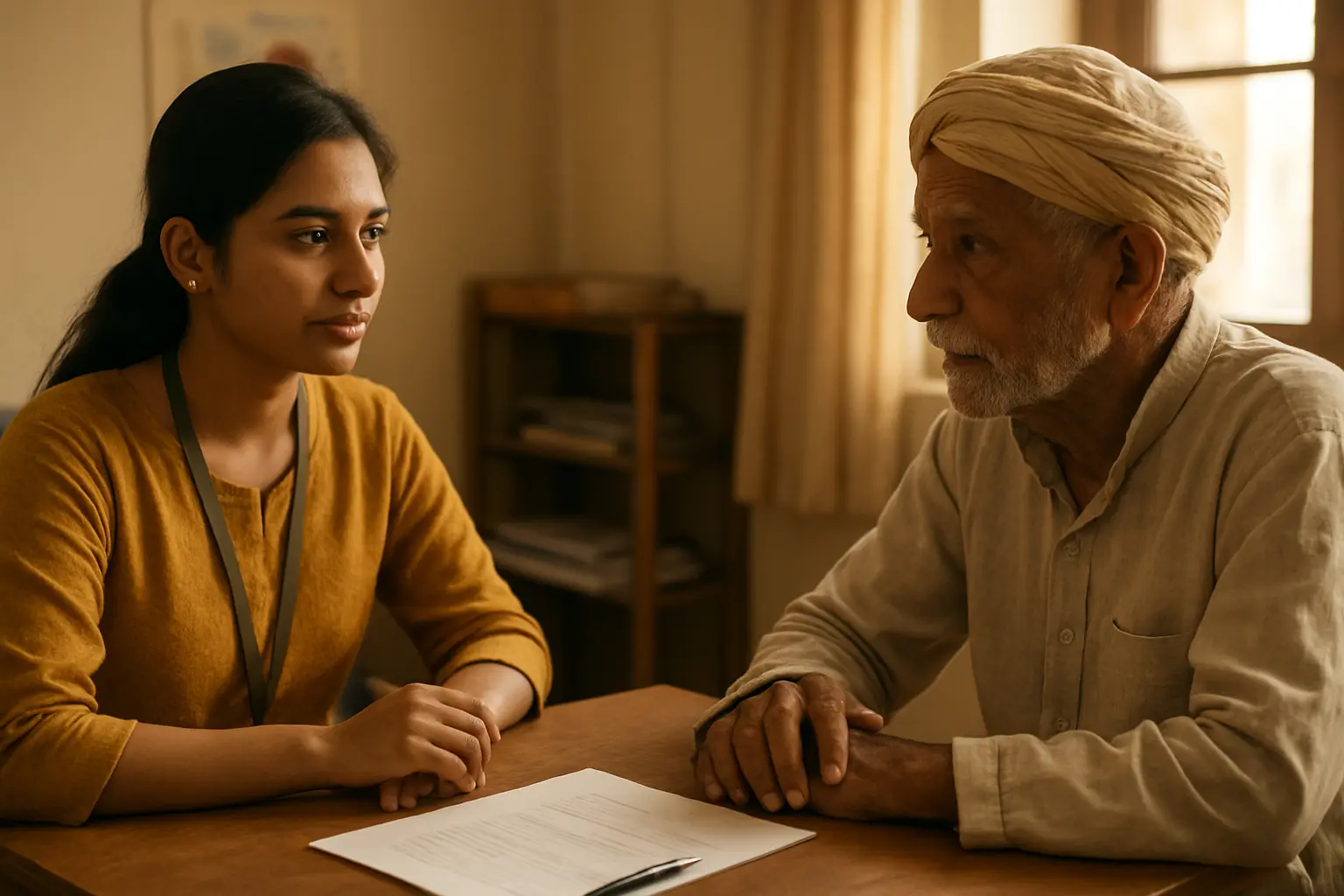
An Indian social work thesis needs written, informed consent from every participant, gatekeeper permission from any NGO or institution you recruit through, and — if your study touches health, trafficking, abuse or another sensitive area — clearance from an institutional ethics committee before fieldwork starts. There is no single national ethics law for social work research the way the UGC Ph.D. Regulations govern format; the standard is set by your department and the ethical code your discipline follows.
Which body actually reviews a Social Work (MSW) thesis in India?
Most Indian MSW and M.Phil in Social Work programmes route thesis proposals through a departmental research committee or a university-level Institutional Ethics Committee (IEC), not a specialised social-work ethics board. When the study is only social or behavioural — attitudes, coping strategies, service delivery — some departments treat committee sign-off as sufficient. The moment your fieldwork touches a health outcome, a clinical population, or biomedical data, the ICMR National Ethical Guidelines for Biomedical and Health Research Involving Human Participants (2017) apply, because their scope explicitly extends to “social and behavioural research” that is health-related — read the scope clause of your own guideline document before assuming it does or does not bind you. A community-development thesis on livelihoods is usually outside that scope; a thesis on HIV-affected households or mental-health service users is usually inside it.
What does the consent form need to say?
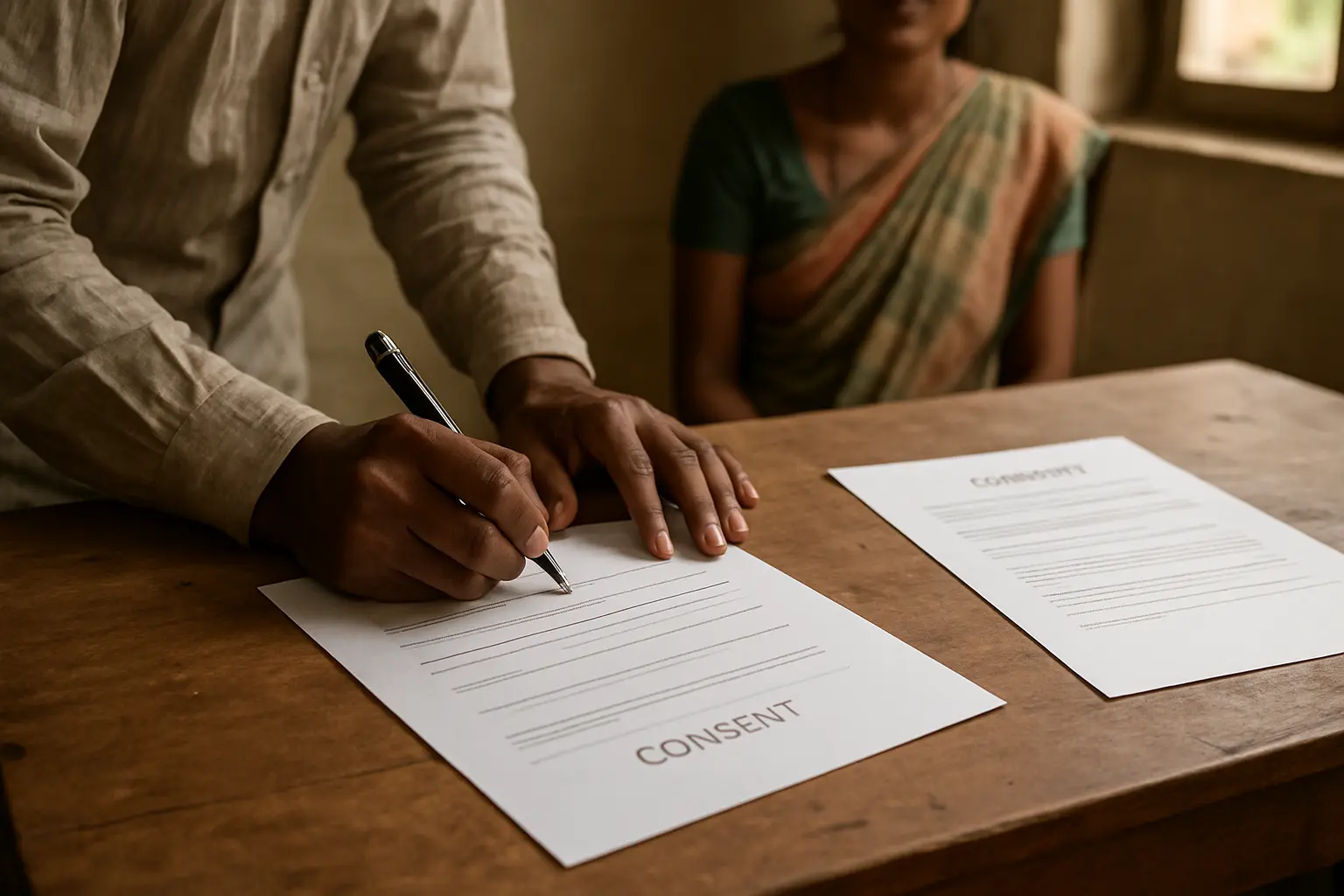
An examiner reading your Chapter 3 methodology wants to see that consent was informed, not just signed. A defensible participant information sheet and consent form for a social work thesis states, in the participant’s own language where possible:
- Who you are, your university, your guide’s name, and the purpose of the study in one plain sentence
- What participation involves — an interview of roughly how long, a home visit, a group discussion — and that it is voluntary
- That refusal or withdrawal at any point carries no penalty and no effect on any service the person receives from the NGO or agency you accessed them through
- How confidentiality will be kept: pseudonyms in the write-up, data stored separately from names, who will and will not see the raw transcripts
- Any limit to confidentiality — the IFSW Global Social Work Statement of Ethical Principles is explicit that “social workers respect and work in accordance with people’s rights to confidentiality and privacy unless there is risk of harm to the self or to others” and that practitioners must “inform the people with whom they engage about such limits” (Principles 6.1 and 6.2). If your protocol requires you to report disclosed abuse, say so before the interview, not after
- A contact — your guide, not just you — for a complaint or a question later
A worked opening line examiners accept: “I have explained the purpose of this study to [participant name] in [language], answered their questions, and they have agreed to take part on the understanding that they may withdraw at any time without giving a reason.” Signed and dated, in duplicate, one copy left with the participant.
What ethical principles do Indian social work departments actually cite?
Chapter 3 of an Indian MSW or M.Phil thesis is expected to name the code your ethical procedure follows, not just describe the procedure in your own words. Three references cover most Indian departments’ expectations:
- The IFSW Global Social Work Statement of Ethical Principles — the profession’s own international code, useful because it is written for social work specifically rather than adapted from medicine or psychology. Principle 5 (full participation in decisions affecting one’s own life) and Principle 7 (holistic assessment with the full participation of the people, organisations and communities studied) sit directly behind the consent and participation language examiners look for
- The ICMR National Ethical Guidelines (2017) — cited whenever the study is health-related, as the scope clause above sets out, and the reference most Indian Institutional Ethics Committees actually work from procedurally, even for a social work department, because it is the guideline most IECs are constituted to apply
- Your own department’s or university’s research ethics policy — increasingly common at Indian schools of social work (TISS being the most visible example, though its own procedures are internal and not something this thesis reproduces) as a locally adopted document that may be stricter than either of the above on specific points such as recording consent from minors or storing data
Cite whichever of these actually governed your clearance, by name and year, in your methodology chapter — a vague sentence such as “ethical standards were followed” without naming the standard is one of the more common reasons a synopsis committee sends Chapter 1 back for revision.
How does consent change for children, survivors and other vulnerable groups?
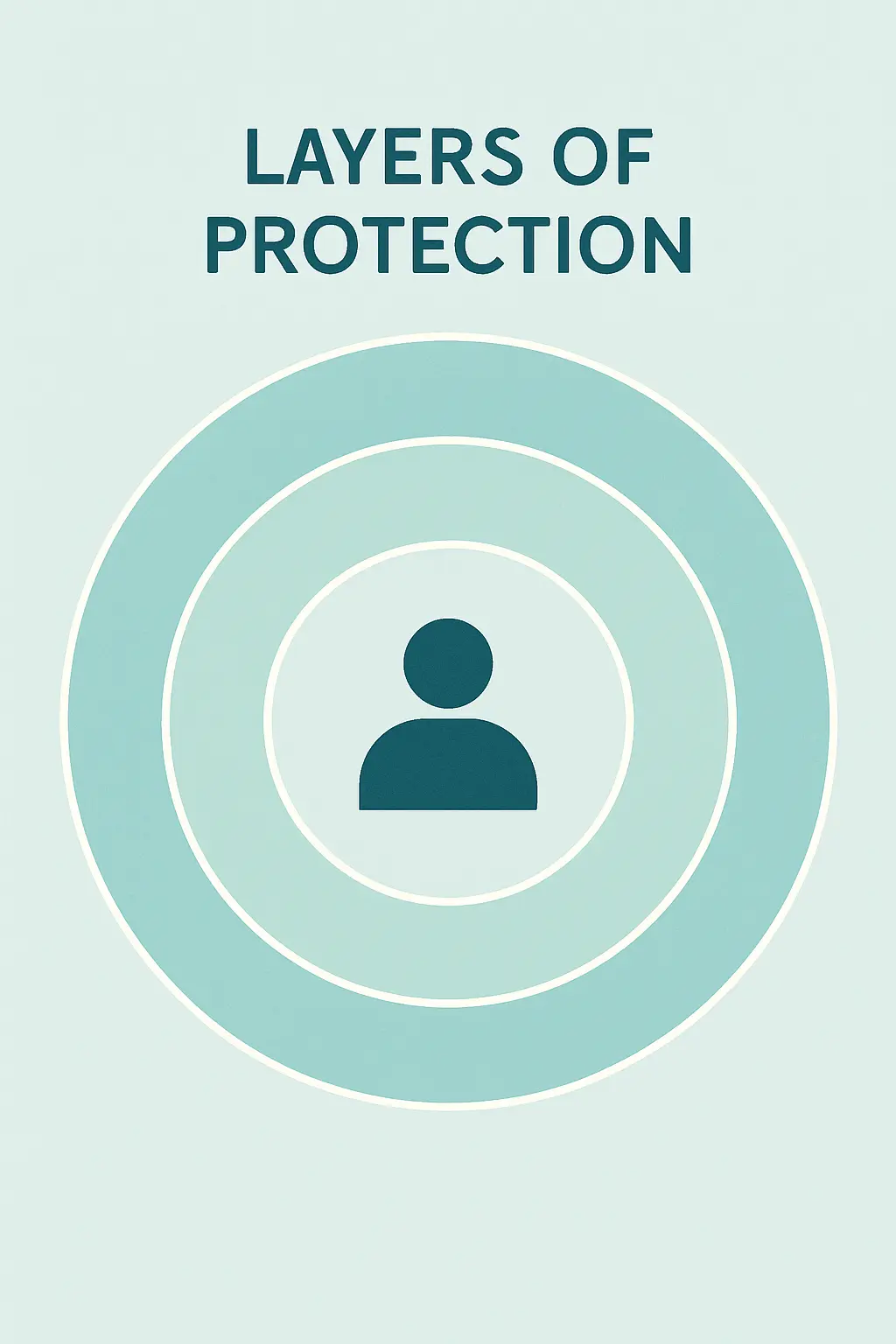
A social work thesis is more likely than most disciplines to involve children in institutional care, survivors of domestic violence or trafficking, persons with disabilities, or people in custody — populations where a signature alone does not establish valid consent. The working pattern Indian departments expect:
- Children: written consent from a parent or legal guardian, plus the child’s own assent in age-appropriate language, recorded separately. If your fieldwork is inside a child-care institution, the institution’s own child-protection policy and, where the study touches disclosed abuse, your obligations under the Protection of Children from Sexual Offences (POCSO) framework govern what you must report — check this with your guide and the institution before the first interview, not during it
- Survivors of violence or trafficking: a trauma-informed consent process — no interview on the first meeting, a female interviewer where the participant requests one, and a referral pathway ready (a counsellor’s number, a shelter’s helpline) if the interview raises distress
- Persons with disabilities or under guardianship: consent from the legal guardian where capacity is genuinely in question, but the participant’s own assent sought wherever they can express it — do not treat guardian consent as a substitute for asking the person directly whenever that is possible
- Participants inside an institution (a shelter home, an old-age home, a de-addiction centre): consent must be free of any implied pressure from the institution’s staff — interviews conducted where staff cannot overhear, and participation stated in writing to make no difference to the services the person receives there
Do you need the NGO or institution’s permission as well as the individual’s?
Yes, and Indian examiners specifically check for both. Gatekeeper permission — a letter from the NGO, panchayat, hospital social-work department or government scheme office where you recruited participants — establishes that you had a legitimate route of access; individual consent establishes that each person agreed to take part. One does not substitute for the other. Keep the gatekeeper letter as an appendix and reference its date in Chapter 3; a thesis that names an NGO as a data source without a permission letter on file is a common examiner objection at the viva.
What does anonymisation look like in a case-study or fieldwork thesis?
Social work theses lean heavily on case studies and narrative interviews, which makes anonymisation harder than a survey with numbered respondents. The working discipline:
- Replace names with pseudonyms or codes (P1, P2…) consistently across the whole document, including any verbatim quotes used in the discussion chapter
- Change or generalise identifying details that are not analytically necessary — the exact village name, the specific ward number, an unusual occupation — while keeping the details that matter to your findings (age band, gender, broad location)
- Store the master list linking codes to real identities separately from the thesis file, accessible only to you and your guide, and destroy or seal it per your department’s data-retention practice after the viva
- When a case is distinctive enough that a reader familiar with the site could identify the person even without a name — a single male social worker in a small rural NGO, for instance — flag this limitation explicitly in your ethics section rather than let an examiner find it
What happens if you skip ethics clearance?
Outcomes vary by university, but the exposure is real: some Research Advisory Committees will not accept a thesis for evaluation without an ethics clearance certificate or committee-approval letter in the appendix; others accept it at submission but the external examiner can flag the absence at the viva and send the work back for a clearance letter before the degree is confirmed. Either way, retrofitting ethics approval after fieldwork is finished is far harder than budgeting two to four weeks for it before you start — most departmental committees meet monthly or on a fixed cycle, and a missed cycle is a missed semester. A more general walk-through of the clearance process — including which review category your study falls into and a worked participant information sheet — is covered in how to get ethics committee clearance for a thesis.
Ethics clearance is only one gate. If your bigger worry is how many interviews will actually be enough once fieldwork starts, or where else in an Indian university thesis you are expected to name your data source, how many interviews are enough for a qualitative thesis and where to find data for your Indian thesis cover the two questions that usually come right after consent is sorted. If you are still working out whether your MSW project counts as a dissertation or a thesis under UGC’s terms, thesis vs dissertation vs project report in India settles the vocabulary before your synopsis does. Tesify’s AI thesis assistant can draft a participant information sheet and consent form in the structure Indian ethics committees expect, and flag where your protocol is missing a required clause, so the version you take to committee is closer to approvable on the first pass — see how it fits into the wider submission process in what is Shodhganga and will your thesis be uploaded there.
Frequently asked questions
Does a social work thesis always need ethics committee approval in India?
Not always through the same body. If your study involves a health outcome, a clinical or patient population, or is otherwise health-related, the ICMR 2017 guidelines’ scope applies and you need Institutional Ethics Committee clearance. A purely social or behavioural study — attitudes, service satisfaction, livelihood strategies — is more commonly cleared by your department’s own research or ethics committee. Ask your guide which route your specific study falls under before you write the proposal.
Can I use a verbal consent instead of a signed form?
Only where written consent itself would be a barrier or a risk — a participant who cannot read, or a situation where a signed document could endanger someone (for example, a survivor still living with an abuser). In those cases, record verbal consent with a witness present and note the reason for the departure from written consent in your methodology chapter; do not simply skip documentation.
What if a participant wants to withdraw after the interview is transcribed?
Honour it. State in your consent form exactly how long that window stays open — many Indian departments use “until data analysis begins” or a fixed number of weeks after the interview — and remove the participant’s data from your dataset and any drafts if they exercise it within that window.
Can my thesis use pseudonymised case material from my own field placement/internship agency?
Only with the same two layers of permission as any other fieldwork site: the agency’s written permission to use case material for research, and either individual client consent or full anonymisation the agency and your ethics committee both accept as adequate. A placement relationship does not itself grant research rights over the agency’s clients.
Does the Indian data-protection law affect a social work thesis?
It is relevant to how you store and secure data — names, contact details, health or welfare information collected during fieldwork are personal data under India’s data-protection framework, which is a separate compliance layer from your ethics committee’s approval. Check with your department whether it has updated guidance on secure storage and deletion timelines; do not assume ethics clearance alone covers your data-handling obligations.
Do I need consent to use case records already held by the NGO I am studying?
Yes, in two layers: the NGO’s own permission to access its records (a gatekeeper letter), and separately the individual client’s consent to have their case used in your research, unless the records are fully anonymised before you ever see them and your ethics committee accepts that as sufficient. Anonymising after the fact does not remove the need for the first consent.
Is a translated consent form acceptable if participants do not read English?
Expected, not just acceptable. A consent form in a language the participant does not read is not informed consent. Most Indian committees ask for the form in the participant’s language, sometimes with a back-translation on file to show the translation was checked.
What is the difference between ethics clearance and departmental research-committee approval?
A research or synopsis committee approves your topic, objectives and methodology as academically sound. An ethics committee separately reviews the treatment of your human participants — consent, risk, confidentiality — regardless of whether the topic itself was already approved. Some Indian universities combine both reviews into one committee; others run them separately, and a thesis can have topic approval without ethics clearance yet.
Do focus group participants need individual consent, or is group consent enough?
Individual, written consent from every participant in the group — group or verbal assent alone is not treated as sufficient by most Indian ethics committees, because each person is disclosing information in front of others and needs to understand that limit on confidentiality specifically.
How long should I keep signed consent forms after my viva?
Check your specific department’s data-retention policy — practice varies — but a common minimum is to retain signed forms and the identity-linking key for a fixed period after the degree is awarded (commonly framed as several years), stored separately from the thesis itself and accessible only to you and your guide.