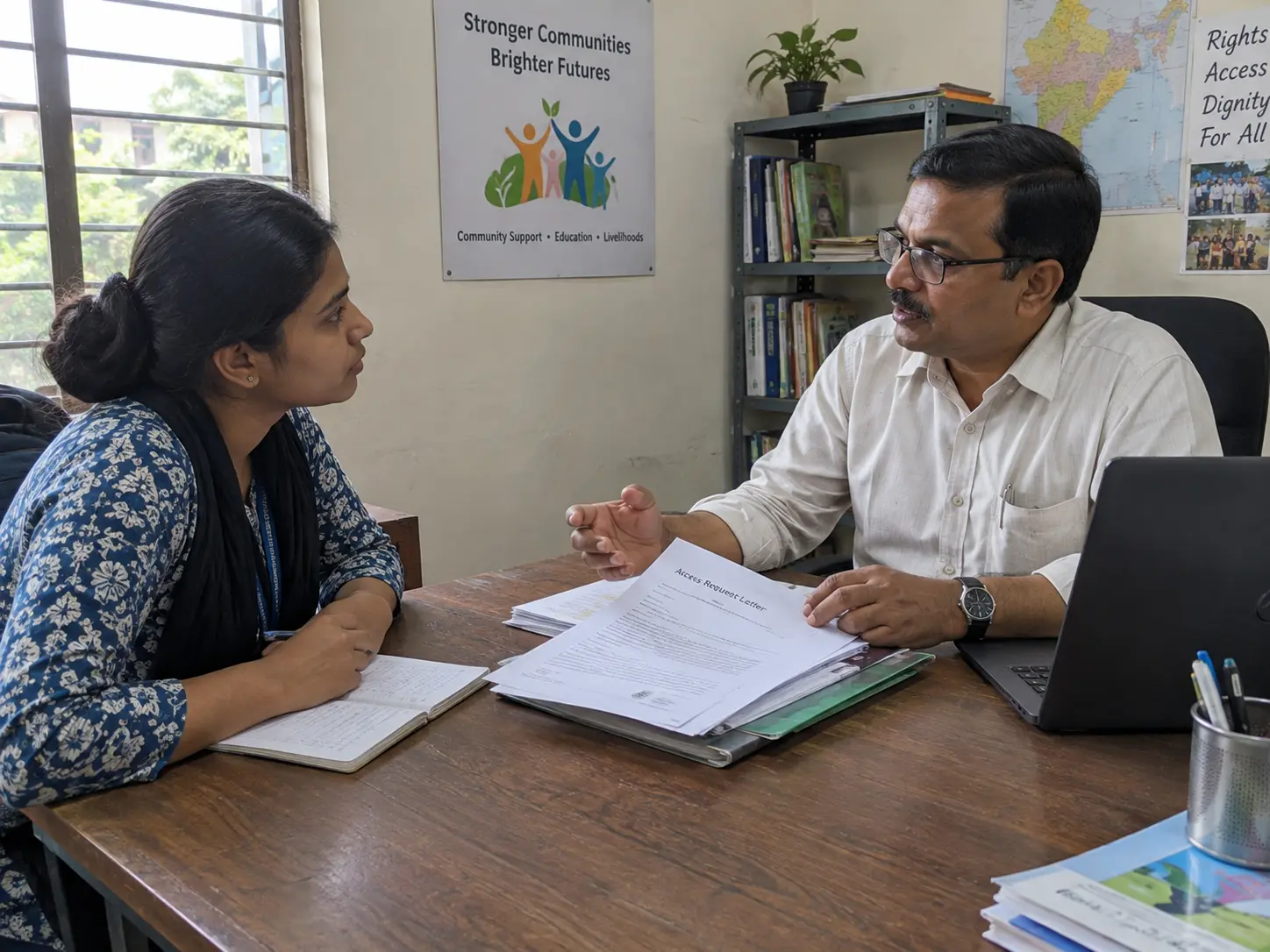
Your MSW supervisor has approved your topic, your interview guide is ready, and then the NGO you were counting on for access goes quiet — no reply to your email, no one picking up, three weeks gone from a timeline that did not have three weeks to spare. This is not a rare setback; it is one of the most common reasons Social Work dissertation fieldwork stalls in India, and it is almost always preventable with the right paperwork done early, in the right order.
Why Access to an NGO Is a Negotiation, Not a Formality
An NGO or field agency granting you research access is taking on real cost: staff time to introduce you to clients or beneficiaries, reputational risk if your presence disrupts service delivery, and — where you will touch any of the organisation’s own case records — a genuine data-protection obligation on their part, not just yours. Treat the request accordingly: a one-line email asking to “do research” at their site is the fastest way to a non-reply. A request that states exactly what you need (how many participants, what kind of interaction, over what period), what you are offering in return (a copy of your findings, often the only thing a small NGO actually wants), and what safeguards you will follow, gets answered.
The Access-Letter Sequence, in the Order It Actually Works
- Institutional approval first. Your department’s research committee or ethics clearance, and your supervisor’s sign-off on the specific site, before you approach any organisation — the general clearance process is covered in our guide to ethics committee clearance for an Indian thesis.
- A formal access-request letter, on your institution’s letterhead, stating your research question, your data-collection method, the number of participants you are requesting, the time period, and what the organisation gets in return.
- An organisational response — often a Memorandum of Understanding (MoU) or a simple written permission letter — that states what the NGO is agreeing to: which staff or clients you may approach, what spaces you may use, what oversight (if any) the organisation wants over your interaction with clients.
- A confidentiality undertaking from you to the organisation, separate from your own institution’s ethics consent form, covering any organisational information (client records, internal processes, staff details) you may become privy to beyond what your own participants tell you directly.
- Participant-level informed consent, obtained directly from each individual participant, independent of the organisation’s own permission — an NGO’s agreement to let you in the door does not substitute for a client’s own consent to be interviewed.
Why This Access Chain Matters More in Social Work Than in Most Other Fields
Social work fieldwork routinely involves vulnerable populations (survivors, children, people in crisis, marginalised communities) accessed through an organisation that already holds a duty of care toward them — which means your access request sits inside an existing trust relationship you did not build and could damage if handled carelessly. A client who feels obligated to participate because “the NGO asked them to” has not given free consent, and an organisation that senses this risk will (correctly) restrict your access. State explicitly, in both your access request and your consent process, that participation is entirely the client’s own choice and has no bearing on the services they receive from the organisation — this single sentence, made explicit rather than assumed, is often what separates an NGO that grants access from one that does not. The same care applies to how you describe the organisation itself in your dissertation: naming a small NGO explicitly, alongside sensitive findings about its practice or its clients, can expose it to real reputational risk it did not sign up for when it agreed to let you in. Agree in advance, in writing, on how the organisation will be identified — by real name, by a pseudonym, or only by type and location — and hold to that agreement through to the final submitted document, not just the draft your supervisor first reviews.

Data Ownership: Whose Data Is It, Once You Have Collected It?
Three categories of data can get confused in an NGO-based dissertation, and your access agreement should distinguish them explicitly: your own primary data (interviews, surveys, observations you conducted yourself) belongs to you as the researcher, subject to your institution’s data-retention policy and your consent process; the organisation’s own case records or administrative data (if you were given access to review them, rather than collect your own) remain the organisation’s property, and your access agreement should state what you may extract, cite or reproduce from them, and in what anonymised form; and any data you generate jointly (a workshop you ran with the NGO’s staff, for instance) needs an explicit agreement on which party may use it for what — your thesis, the NGO’s own reporting, or both. Put this in writing before data collection starts, not as an afterthought when someone asks who owns what.
Where the Digital Personal Data Protection Act, 2023 Actually Applies
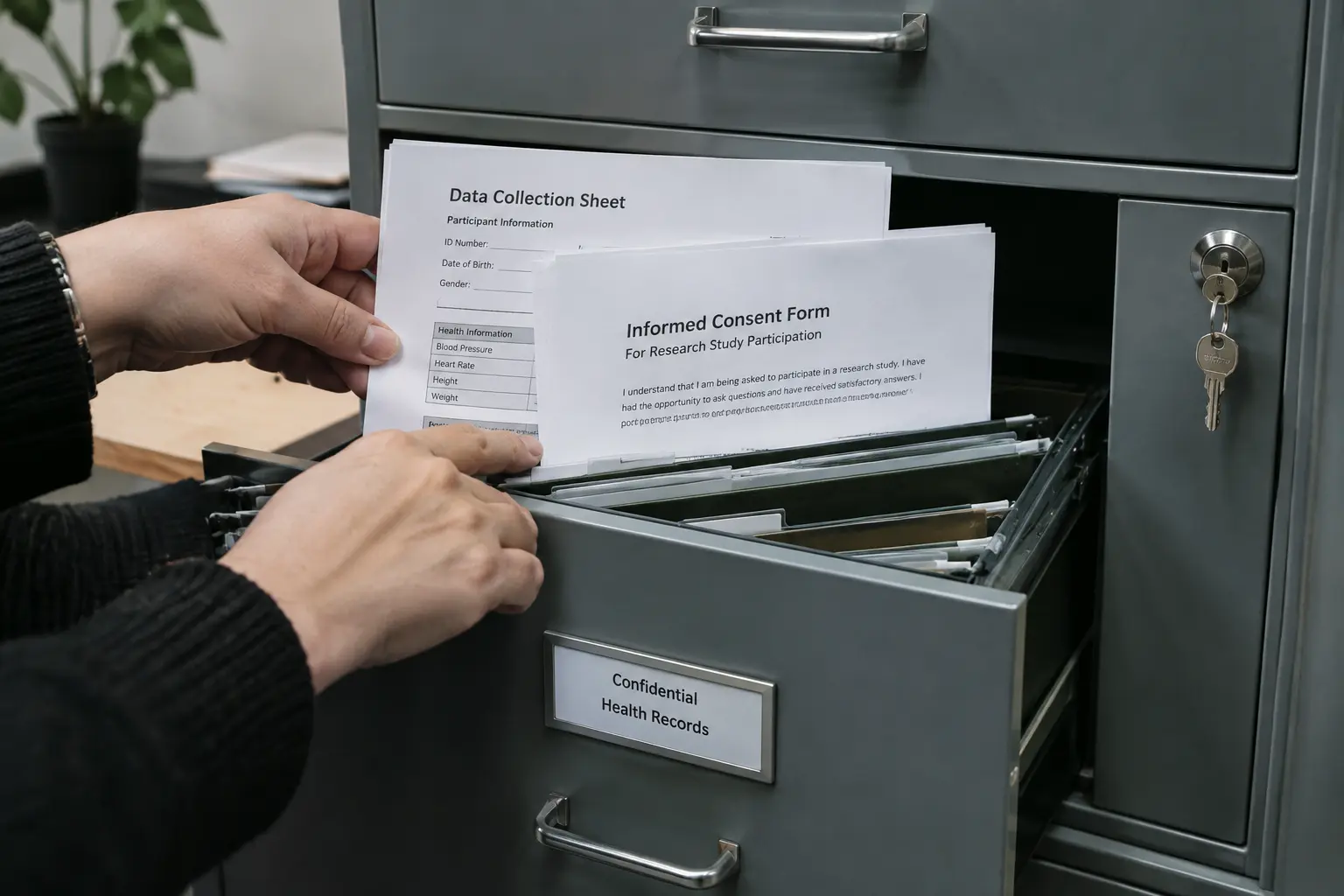
If your data collection at the NGO involves personal data — names, contact details, case histories, anything that identifies a living individual — the Digital Personal Data Protection Act, 2023 is the current Indian framework to check. The Act defines a “Data Fiduciary” as any person who alone or in conjunction with others determines the purpose and means of processing personal data, and places duties on that fiduciary, including security safeguards and erasure once the purpose is served. It also contains a research carve-out: under Section 17(2)(b), the Act does not apply to processing necessary for research, archiving or statistical purposes where the data is not used to take any decision specific to the individual and the processing follows the standards the government prescribes. Whether your project sits inside that carve-out depends on those prescribed standards and on your institution’s own reading of them — so treat it as a question for your ethics committee, not a blanket exemption. In practice for a dissertation: obtain explicit, informed consent for any personal data you collect (which good research ethics requires regardless of the Act); do not retain identifying information longer than your institution’s own data-retention policy allows; and if the NGO shares any of its own client records with you, get written clarity from the organisation on what processing of that data your access permits, since the organisation — not you — is likely the party that originally collected it under its own consent basis with its clients.
A Worked Illustrative Example: What the Access Letter Actually Says
A fictional worked example, labelled illustrative — adapt the structure, not the specific wording, to your own study; every bracketed term below is a fill-in for you to replace with your own details, not a real submitted letter. “I am a Master of Social Work student at [your university], conducting a dissertation on [your topic] under the supervision of [supervisor’s name], approved by [your department’s ethics/research committee] on [date]. I am requesting permission to conduct semi-structured interviews with up to [number] staff members/clients at [organisation name] between [start date] and [end date], each interview lasting approximately [duration]. Participation will be entirely voluntary, based on each individual’s own informed consent, and will have no bearing on any service or employment relationship with your organisation. All data will be anonymised in my final dissertation, and I will provide your organisation with a summary of findings on completion. I have attached my ethics clearance letter and my interview guide for your review.” Notice what this version does that a one-line request does not: it names the approval already obtained, states an exact number and duration rather than an open-ended ask, states the voluntariness safeguard explicitly, and offers something concrete in return.
What to Do When Access Falls Through Anyway
Even a well-negotiated access agreement can collapse — a change in NGO leadership, an unrelated crisis at the organisation that reasonably takes priority, or a client-protection concern the organisation raises late. Build a fallback into your proposal from the start: a second, comparable organisation identified in advance; a narrower scope that needs fewer participants or a shorter access window; or, as a last resort, a documented change of setting discussed with your supervisor rather than a silent extension of your timeline. Committees respond far better to a proposal that names its access risk and states a contingency than to one that assumes access will simply happen.
How Does This Differ From the Ethics/Consent and Interview-Guide Guides?
The ethics-committee process and the participant consent form itself — what a departmental ethics committee reviews, and how consent changes for children and survivors — are covered in our guide to ethics approval and informed consent for a Social Work thesis. The interview protocol and question bank once you have access are covered in our interview-guide guide for a Social Work dissertation. This article covers the step before both: negotiating and documenting the organisational relationship itself — the access letter, the confidentiality undertaking, and who owns the data once it exists.
An access agreement that never gets written down is an access agreement that can quietly unravel three weeks into fieldwork. Tesify helps you structure the access-request letter, the confidentiality undertaking and the consent documentation your NGO placement needs, in your own words, before you knock on the door. Used by 9,000+ students. Write your thesis with Tesify.
Frequently asked questions
What is the first document I need before approaching an NGO for research access?
Your own institution’s research/ethics clearance and your supervisor’s sign-off on the specific site — approach the organisation only after this is in place, not before.
Does an NGO’s permission letter replace individual participant consent?
No — the organisation’s agreement gives you access to the setting; each individual participant must still give their own informed consent independently, and must understand that declining has no effect on the services they receive.
Who owns the data I collect at an NGO — me or the organisation?
Your own primary data (interviews, surveys you conducted) is yours as the researcher, subject to your institution’s policies; the organisation’s own case records remain theirs, and your access agreement should state explicitly what you may extract or cite from them.
Does the Digital Personal Data Protection Act, 2023 apply to a student dissertation?
Possibly not in full: Section 17(2)(b) excludes processing necessary for research purposes where the data is not used for decisions about the individual and the processing follows prescribed standards. Ask your ethics committee how it reads that carve-out, and obtain explicit consent and limit retention of identifying data either way.
What should a confidentiality undertaking to the NGO actually cover?
Any organisational information you become privy to beyond what participants tell you directly in your own data collection — internal processes, staff information, other clients’ case details you might overhear or see — kept separate from your participant consent forms, which cover only your own research data.
What do I do if the NGO stops responding after initially agreeing?
Follow up in writing once, then escalate to your supervisor rather than waiting indefinitely — and have a documented fallback (a second organisation, or a narrower scope) ready so the delay does not consume your entire fieldwork window.
Should the access letter mention what the NGO gets in return?
Yes — stating that you will share a copy of your findings, or another concrete, low-cost benefit, gives a small organisation with limited staff time a concrete reason to say yes to an unpaid researcher request.
Can I use an NGO’s own case records instead of collecting my own data?
Only with explicit written permission specifying what you may access, extract and cite, and typically in anonymised form — case records were collected under the organisation’s own consent basis with its clients, not yours, so your access to them needs its own separate agreement.